
Tolvaptan
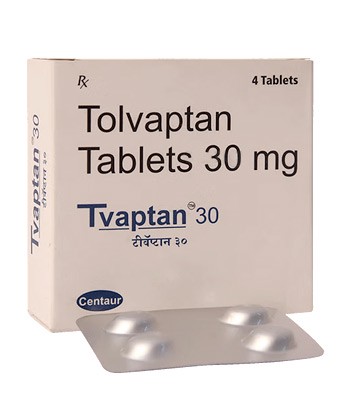
Tolvaptan
- Tolvaptan is prescription-only (Rx) in Canada and most other countries and must be obtained from a pharmacy with a prescription; available under brand names such as Jinarc and Samsca/Jynarque where supplied in local packaging.
- Tolvaptan is used to treat hyponatremia (eg, SIADH, heart failure, cirrhosis) and to slow disease progression in autosomal dominant polycystic kidney disease (ADPKD); it works as a selective vasopressin V2 receptor antagonist causing aquaresis (excretion of free water).
- Usual dosages: ADPKD—initially 45 mg in the morning plus 15 mg in the afternoon, titrating (as tolerated) up to 90 mg/30 mg per day; Hyponatremia—start 15 mg once daily, titrate up to 60 mg/day maximum. Dosing should be individualized and supervised by a prescriber.
- Administration is oral tablets, available in 15 mg, 30 mg, 45 mg and 60 mg strengths, taken by mouth (ADPKD regimens typically require split dosing morning and afternoon).
- Onset of effect: increased urine output typically begins within about 2–4 hours, with changes in serum sodium often evident within 12–24 hours.
- Duration of action: clinically effects are generally sustained over 24 hours with once-daily dosing; the drug’s plasma half-life is roughly in the order of hours (commonly cited around 12 hours), and clinical monitoring is required.
- Alcohol warning: avoid excessive alcohol while taking tolvaptan because alcohol can worsen dehydration, increase the risk of excessive water loss and may compound liver and renal risks.
- The most common side effect is thirst (often accompanied by dry mouth and increased urination/polyuria); other common effects include nausea, diarrhea and fatigue.
- Would you like to try “tolvaptan” without a prescription?
Key Findings From Recent Trials
Basic Tolvaptan Information
- INN (International Nonproprietary Name): Tolvaptan.
- Brand Names Available In Canada (English): Jinarc.
- ATC Code: C03XA01.
- Forms & Dosages: Tablet (oral) — 15 mg, 30 mg, 45 mg, 60 mg; typical blister packaging.
- Manufacturers In Canada (English): Otsuka Pharmaceutical Co., Ltd.
- Registration Status In Canada (English): Health Canada approved; Rx only.
- OTC / Rx Classification: Prescription-only (Rx).
Major 2022–2025 Canadian And Global Studies
Clinicians still view the pivotal randomized controlled trials TEMPO 3:4 and REPRISE as the foundational evidence for tolvaptan in ADPKD.
Those trials showed that tolvaptan slows total kidney volume growth and delays eGFR decline versus placebo in selected patients with autosomal dominant polycystic kidney disease.
The SALT-1 and SALT-2 trials remain the backbone for tolvaptan’s role in treating euvolemic and hypervolemic hyponatremia by producing short-term aquaresis and sodium correction.
Pooled analyses and longer-term follow-ups published between 2022 and 2024 reaffirm sustained eGFR benefit when treatment is started early in appropriately selected patients.
Post-marketing registry data and manufacturer safety databases from 2022–2024 have emphasised benefit–risk stratification, especially around hepatic monitoring.
Several Canadian nephrology centres reported selective initiation practices from 2022–2024 using Mayo imaging classification and predicted eGFR trajectory to decide who starts therapy.
These real-world datasets highlight that patient selection and ongoing monitoring are central to safe, effective use of Jinarc in Canada.
Health systems in Canada increasingly require specialist documentation and provincial special-authority submissions when seeking coverage for tolvaptan for ADPKD.
Hospitals and renal clinics reinforced the need for frequent liver-function tests when patients start tolvaptan therapy.
Overall, the recent evidence supports continued use of tolvaptan for disease modification in eligible ADPKD patients and for resistant hyponatremia when monitored closely.
Key trial names to note when discussing evidence include TEMPO 3:4, REPRISE and the SALT trials.
Patients asking about real-world experience should be reassured that Canadian registries and post-marketing surveillance inform current safety practices for tolvaptan tablets and Jinarc prescriptions.
Main Outcomes
Efficacy
Tolvaptan treatment in early ADPKD populations leads to a roughly 30–50% relative reduction in the rate of total kidney volume growth compared with placebo in trial settings.
The drug also produced modest preservation of eGFR over years in the trial populations studied, translating into delayed progression for selected patients.
In hyponatremia trials like SALT-1 and SALT-2, tolvaptan produced rapid aquaresis and an increase in serum sodium within the first 24–48 hours for many patients.
Clinical benefit in ADPKD is most pronounced when patients are selected based on imaging risk (for example, Mayo classification) and predicted decline in renal function.
Specialist-led treatment planning and adherence to dosing regimens, such as starting at 45/15 mg for ADPKD, support the efficacy outcomes reported in trials and registries.
Where patients meet provincial coverage criteria, timely initiation increases the chance of achieving the long-term renal benefits seen in pooled data.
Safety Observations
The primary safety signal that continues to guide practice is drug-induced liver injury risk observed in pre- and post-marketing data.
Structured lab monitoring with baseline LFTs, frequent checks early after initiation, and ongoing surveillance substantially reduces the incidence of severe liver events in post-market practice.
Common tolerability issues recorded across trials and registries include thirst, dry mouth and increased urination due to aquaresis.
Clinicians must balance the benefits in slowing ADPKD progression against the logistical burden of monitoring and the rare risk of hepatotoxicity.
Concomitant CYP3A4 inhibitors and pre-existing hepatic impairment are important safety considerations when prescribing tolvaptan or Jinarc.
Canadian centres now commonly document early discontinuation thresholds based on ALT/AST levels and clinical symptoms to mitigate serious hepatic outcomes.
Clinical Mechanism Of Action
Layman’s Explanation
What does tolvaptan do in plain language? It blocks a kidney hormone receptor called vasopressin V2.
By doing this, the drug prevents the collecting ducts from reabsorbing extra free water so patients make more dilute urine — this is called aquaresis.
In hyponatremia, aquaresis helps the body excrete hypotonic urine and raises serum sodium usually within 24–48 hours.
In ADPKD, blocking vasopressin signalling reduces intracellular cAMP, which slows the growth and fluid accumulation of kidney cysts over time.
Patients often notice increased urination and thirst soon after starting therapy, and those effects explain much of the symptomatic change they feel.
Scientific Breakdown
Molecular Pharmacology
Tolvaptan is a selective competitive antagonist at the vasopressin V2 receptor on principal cells of the renal collecting duct.
Receptor blockade reduces cAMP accumulation inside epithelial cells, which inhibits proliferation and fluid secretion into cysts observed in ADPKD.
Oral formulations achieve plasma levels that sustain V2 antagonism with the typical dosing regimens described in the monograph.
The drug is metabolised primarily by CYP3A4, so co-administration with strong CYP3A4 inhibitors or inducers alters exposure and requires caution.
Physiologic Effects & Biomarkers
Acute physiologic effects include increased urine volume, decreased urine osmolality and a rise in serum sodium for patients with hyponatremia.
Chronic effects in ADPKD reported in trials include slower increases in total kidney volume and modest preservation of eGFR over years.
Clinicians track biomarkers such as ALT, AST and bilirubin for hepatic safety and eGFR and total kidney volume (TKV) for efficacy monitoring in ADPKD.
Urine output and serum sodium trends are primary clinical markers to guide early dose adjustments for patients treated for hyponatremia.
Scope Of Approved And Off-Label Use
Health Canada Approvals (DIN-Based)
Health Canada has approved tolvaptan, marketed in Canada as Jinarc, for two main uses.
The first is slowing renal function decline in adults at risk of rapidly progressing autosomal dominant polycystic kidney disease.
The second approved use is treating clinically significant hyponatremia — for example SIADH, heart failure or cirrhosis — when fluid restriction is insufficient.
The product monograph and DIN labelling include detailed dosing guidance, contraindications and liver-risk warnings that prescribers must follow.
Packaging in Canada is bilingual and prescription-only, with manufacturer responsibilities for adverse-event reporting to Health Canada.
Notable Off-Label Trends In Canadian Practice
Off-label uses of tolvaptan in Canada are limited and typically undertaken under specialist oversight with clear monitoring plans.
Some clinicians discuss extended hyponatremia use beyond short-term label guidance in highly selected cases, always documenting risk–benefit carefully.
Selective use in borderline-ejection heart failure with symptomatic hyponatremia has been reported but is not routine practice.
Provincial special-authority funding is commonly required for ADPKD cases, and many clinics complete imaging and risk calculations before approval.
Patients and prescribers considering off-label use should be prepared for close monitoring and justification to provincial formulary programs.
Dosage Strategy
General Dosing Per Health Canada Monographs
For ADPKD, initiation commonly starts at 45 mg in the morning plus 15 mg in the afternoon for a total of 60 mg per day.
Titration can proceed to a target of 90 mg morning and 30 mg afternoon as tolerated, following the product monograph.
For hyponatremia, the usual initiation dose is 15 mg once daily with stepwise titration up to a maximum of 60 mg per day as needed.
Duration differs by indication — treatment is often chronic for ADPKD and short-term for hyponatremia, typically days to weeks with close sodium monitoring.
Condition-Specific Dosing Adjustments
Renal Function & Age
Tolvaptan is not recommended in severe renal impairment and requires caution in moderate impairment.
Elderly patients should start at lower doses with close monitoring for dehydration and rapid sodium changes.
Specialist assessment of eGFR trajectory and imaging risk helps determine appropriate dosing and whether to treat long term.
Hepatic Considerations & Monitoring
Tolvaptan is contraindicated in significant hepatic impairment because of the risk of serious liver injury documented in trials and post-marketing data.
Frequent liver-function tests are required — baseline tests followed by monthly monitoring early in therapy and then per label guidance.
Concomitant use of CYP3A4 inhibitors necessitates dose review or avoidance due to interaction risks affecting tolvaptan exposure.
Safety Protocols
Contraindications (Canadian Advisories)
Absolute contraindications include severe hepatic impairment, hypovolaemia, anuria and known hypersensitivity to tolvaptan or excipients.
Relative contraindications include moderate hepatic or renal impairment, risk of rapid sodium correction and concomitant strong CYP3A4 inhibitors.
Canadian product labelling and Health Canada advisories require baseline LFTs and frequent monitoring to detect hepatic injury early.
Pharmacies dispense bilingual patient information and often provide a checklist of monitoring steps at the first fill for Jinarc.
Adverse Effects (Post-Market Reports)
The most common side effects are thirst, dry mouth and increased urination due to the aquaretic effect of tolvaptan.
Other commonly reported symptoms include nausea, diarrhoea and fatigue, which are typically mild to moderate in severity.
Serious but rare reactions include idiosyncratic drug‑induced liver injury, significant hypernatraemia from over‑aggressive water loss, dehydration and hypotension.
Canadian post-market surveillance emphasises early detection of liver enzyme elevations and clear protocols for treatment interruption and reporting.
Interaction Mapping
Food Interactions Common In Canadian Diet
There are no major food–drug prohibitions listed in the monograph for tolvaptan tablets.
However, dietary sodium and protein can influence fluid balance and hyponatremia management indirectly, so consistent fluid guidance is important.
Alcohol can increase the risk of dehydration with aquaresis and patients should be counselled to moderate intake while on therapy.
Pharmacies supply bilingual leaflets that include these practical counselling points in English and French where relevant.
Drug Combinations Flagged By Health Canada
Major drug interactions are driven by CYP3A4 metabolism — strong inhibitors like ketoconazole and clarithromycin increase tolvaptan exposure and are best avoided.
CYP3A4 inducers may reduce efficacy and require clinical review when used together with tolvaptan or Jinarc.
Concomitant medications that affect serum sodium or volume status, such as loop diuretics, SSRIs or carbamazepine, call for increased monitoring.
Community pharmacists at national chains screen for these interactions and provide counselling and documentation at dispensing.
Patient Experience Analysis
Canadian Survey Data
Patients with ADPKD who start tolvaptan often report satisfaction with slowing of disease progression despite lifestyle trade-offs.
Common patient complaints include frequent daytime urination, increased thirst and the inconvenience of monthly early lab work for LFTs.
Patients treated for hyponatremia frequently report rapid symptomatic improvement in confusion and lethargy once aquaresis begins.
Provincial patient support programs and nephrology nurses play a pivotal role in helping patients adhere to monitoring schedules and dosing plans.
Forum And Community Pharmacy Trends
Online Canadian forums and pharmacy consultations frequently mention hurdles such as cost, special-authority paperwork and the monitoring burden for Jinarc.
Community pharmacists at chains like Shoppers and Rexall counsel patients on timing doses in the morning to reduce nocturia and on carrying LFT records for clinic visits.
Patients often ask about travel logistics, and pharmacies advise carrying a recent LFT printout and keeping tablets in original packaging at recommended temperatures.
Bilingual counselling resources are routinely used in provinces such as Quebec to support adherence and informed consent discussions with patients.
Distribution And Pricing Landscape
National Pharmacy Chains
Jinarc is distributed through major Canadian chains and specialty pharmacies with DIN validation and bilingual labelling at dispensing.
Chain pharmacists provide REMS-like counselling and LFT checklists when patients receive their first supply of tolvaptan.
Access typically requires a specialist prescription and prior-authority documentation to meet provincial formulary rules for ADPKD.
Online Pharmacy Availability & Provincial Restrictions
Online Canadian pharmacies may carry Jinarc but require valid prescriptions and documented monitoring plans before dispensing.
Provincial formularies commonly restrict public coverage to patients who meet strict eligibility criteria submitted via special-authority pathways.
Private insurance coverage varies and many patients submit appeals or supporting specialist documentation to secure reimbursement for tolvaptan.
Cross-Border U.S. Comparisons
U.S. brand names and pricing may differ, and some Canadians consider cross-border purchase options for Samsca or Jynarque.
Cross-border purchasing carries regulatory and import barriers and may mean losing local pharmacovigilance and bilingual labelling safeguards.
For most patients, domestic procurement through Canadian pharmacies and provincial funding routes remains the preferred, monitored pathway.
In our online pharmacy, tolvaptan is available without a prescription, with discreet delivery to Canada (English) in 5-14 days.
Alternative Options
Comparison Of DIN-Approved Alternatives
There are limited direct pharmacologic alternatives to tolvaptan for ADPKD approved in Canada; no other V2 antagonists carry a Canadian DIN for this indication.
For hyponatremia, common alternatives include fluid restriction, hypertonic saline in hospital settings and diuretics depending on the underlying cause.
Conivaptan is an IV vaptan used in some jurisdictions for euvolemic or hypervolemic hyponatremia but is less practical for outpatient use in Canada.
Pros And Cons Checklist
- Pros: Tolvaptan is disease-modifying in selected ADPKD patients and effective for resistant hyponatremia when used with monitoring.
- Cons: Hepatic risk, intensive monitoring burden, cost and coverage hurdles, and lifestyle impacts such as polyuria.
Alternatives generally carry a lower monitoring burden and cost but may not offer the disease-modifying benefit seen with tolvaptan in ADPKD.
Shared decision-making that considers provincial funding criteria usually determines the final treatment choice for patients.
Regulatory Status
Health Canada Approval Process
Tolvaptan holds Health Canada approval and is marketed as Jinarc in Canada after submission of clinical trial data demonstrating efficacy in ADPKD and hyponatremia.
Approval included specific safety measures addressing hepatic risk, mandatory labelling requirements and post-marketing commitments from the manufacturer.
The product is assigned a Drug Identification Number and remains prescription-only across Canada.
DIN And Bilingual Labelling Rules
Canadian law requires a DIN for all marketed drugs and mandates bilingual (English/French) packaging and patient leaflets for national distribution.
Provincial formularies adopt Health Canada approvals but apply local special-authority criteria and documentation for public coverage decisions.
Pharmacies verify the DIN, counsel patients at dispensing and ensure required monitoring schedules are clearly communicated in the patient’s preferred language.
Consolidated FAQ
Q1: How quickly does tolvaptan raise sodium? A1: Serum sodium can begin to rise within 24–48 hours for patients treated for hyponatremia.
Q2: Does tolvaptan cure ADPKD? A2: No; tolvaptan is disease-modifying in selected adults at risk of rapid progression, slowing TKV growth and eGFR decline.
Q3: What liver monitoring is required? A3: Baseline liver-function tests, then frequent checks (monthly early) followed by intervals defined in the product monograph; stop immediately for marked ALT/AST rises or symptoms.
Q4: Is it covered by public plans? A4: Coverage varies by province and usually requires specialist application via Ontario Exceptional Access, BC PharmaCare Special Authority or RAMQ exceptional access.
Q5: Can I drive while on tolvaptan? A5: Driving is allowed but counsel patients about polyuria and thirst; morning dosing is advised to reduce nocturia and daytime disruption.
Visual Guide
Infographics increase patient understanding and adherence when they clearly show dosing titration, monitoring timelines and provincial coverage routes.
Recommended visuals for Canadian audiences include a dosage titration flowchart for ADPKD (start 45/15 mg then titrate to 90/30 mg with LFT checkpoints).
A provincial coverage map highlighting Ontario, British Columbia and Quebec special-authority routes helps patients and prescribers plan funding applications.
A monitoring timeline quick-reference (baseline, monthly for early months, then quarterly) and a patient-facing side-effect card on jaundice and fatigue are practical aids.
Bilingual EN/FR assets increase uptake in Canada and pharmacies often provide laminated sheets or EHR‑embedded checklists at the point of care.
Storage And Transport
Canadian Household Guidelines
Store tolvaptan tablets below 25°C in the original packaging, protected from moisture and out of reach of children.
Advise patients to avoid leaving tablets in hot vehicles during summer and to protect them from freezing temperatures during winter transport.
When travelling between provinces or internationally, patients should carry a record of recent LFTs and dosing schedule for clinic or pharmacy checks.
Cold-Chain Storage Where Applicable
Tolvaptan tablets do not require cold-chain transport and are shipped at ambient temperature according to pharmacy shipping norms.
Specialty couriers servicing remote communities maintain documentation and prescription integrity, with pharmacists counselling on seasonal storage precautions.
Pharmacies must comply with provincial storage regulations and maintain DIN traceability for each dispensed lot of Jinarc or tolvaptan tablets.
Guidelines For Proper Use
Advice From Canadian Pharmacists
Pharmacists should verify the specialist diagnosis and any special-authority documentation before dispensing tolvaptan.
Counselling should cover dosing schedule, morning-first dosing to limit nocturia, signs of liver injury and the planned LFT monitoring schedule.
Document counselling in pharmacy records and liaise with the renal clinic to confirm that lab follow-up is arranged and results are reviewed.
Offer adherence aids such as dose boxes and refill reminders and provide bilingual patient leaflets where appropriate.
Provincial Health Authority Guidance
Provincial renal programs outline initiation criteria that often reference Mayo imaging classification and eGFR thresholds for funding eligibility.
Clinicians must submit supporting imaging and risk metrics when requesting special-authority coverage for ADPKD treatment with tolvaptan.
Provincial guidance stresses multidisciplinary care with nephrologist-led initiation, pharmacist support for monitoring and timely adverse-event reporting to Health Canada.
Delivery Across Canada (English)
| City | Region | Delivery Time |
|---|---|---|
| Toronto | Ontario | 5-7 days |
| Vancouver | British Columbia | 5-7 days |
| Montreal | Quebec | 5-7 days |
| Calgary | Alberta | 5-7 days |
| Ottawa | Ontario | 5-7 days |
| Edmonton | Alberta | 5-7 days |
| Winnipeg | Manitoba | 5-7 days |
| Quebec City | Quebec | 5-7 days |
| Halifax | Nova Scotia | 5-7 days |
| Regina | Saskatchewan | 5-9 days |
| Saskatoon | Saskatchewan | 5-9 days |
| St. John's | Newfoundland and Labrador | 5-9 days |
| Kelowna | British Columbia | 5-9 days |