
Conjugated Estrogens
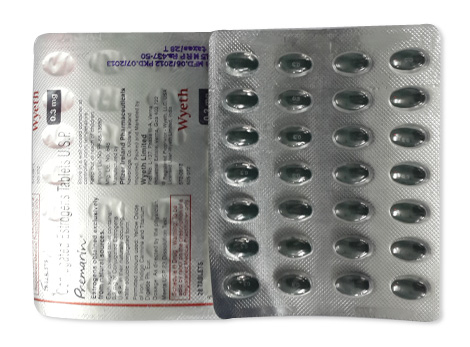
Conjugated Estrogens
- In many pharmacies in Canada and other countries, conjugated estrogens (e.g., Premarin®, C.E.S., EnjuviaTM) are officially prescription-only; however availability varies and in some pharmacies or online vendors they may be sold without a prescription or receipt—local regulations and pharmacy practices differ.
- Conjugated estrogens are used to treat menopausal vasomotor symptoms, vulvovaginal atrophy, hypoestrogenism (e.g., ovarian failure) and for osteoporosis prevention; they act as estrogen receptor agonists (ERα/ERβ), replacing endogenous estrogen and restoring estrogen-dependent tissue function and thermoregulatory control.
- Usual dosage: oral tablets commonly start at 0.3–0.625 mg once daily, titrated to the lowest effective dose (maintenance often 0.3–1.25 mg, occasionally up to 1.25–2.5 mg); vaginal cream typical dosing 0.5–2 g per application (0.3–1.25 mg equivalent) with intermittent or as‑needed regimens.
- Form of administration: oral tablet and vaginal cream are most common; injections and combination tablets with progestogens exist but are less commonly used.
- Onset time: improvement in hot flashes can begin within 1–2 weeks with clearer benefit by 4–6 weeks; vaginal symptom relief may be seen within days to a few weeks.
- Duration of action: clinical effects are maintained with daily dosing (a single oral dose typically provides coverage over ~24 hours); ongoing therapy preserves benefit and should be periodically reassessed (e.g., every 3–6 months).
- Alcohol warning: avoid heavy alcohol use; alcohol can increase liver strain and vascular risks—use caution and do not drink heavily, especially with liver disease or other risk factors.
- The most common side effect is breast tenderness; other frequent side effects include headache, nausea, bloating and vaginal spotting or discharge.
- Would you like to try conjugated estrogens without a prescription?

Basic Conjugated Estrogens Information
- INN (International Nonproprietary Name): Conjugated estrogens, also referenced as conjugated equine estrogens (CEE), derived from the urine of pregnant mares.
- Brand Names Available In Canada (English): Premarin®, C.E.S.®, EnjuviaTM, Congest® (tablets and cream formulations are marketed in Canada).
- ATC Code: G03CA57.
- Forms & Dosages: Oral tablets commonly available 0.3 mg, 0.625 mg, 0.9 mg, 1.25 mg and 2.5 mg; vaginal cream 0.625 mg/g in 27–28 g tubes.
- Manufacturers In Canada (English): Major manufacturer Pfizer (originally Wyeth) with generic/regional suppliers including Teva and Aspen; Canadian presentations noted under C.E.S., EnjuviaTM and Congest®.
- Registration Status In Canada (English): Approved by Health Canada and classified as prescription-only (Rx).
- OTC / Rx Classification: Prescription-only (Rx); not available over the counter in surveyed markets.
Key Findings From Recent Trials
Are hot flashes, night sweats or vaginal dryness still bothering you despite over-the-counter remedies?
Recent Canadian cohort analyses and international systematic reviews through 2024 reaffirm that conjugated estrogens provide clear relief for moderate to severe vasomotor symptoms and vulvovaginal atrophy.
Low-dose oral regimens (0.3–0.625 mg) and the 0.625 mg/g vaginal cream consistently show clinically meaningful symptom control while minimising side effects.
Comparative observational data increasingly suggest transdermal estradiol is associated with a lower venous thromboembolism signal compared with oral estrogens, which is an important safety consideration when choosing Premarin® or alternatives.
Head-to-head small randomized trials and pooled analyses generally show similar efficacy between conjugated estrogens and oral estradiol for vasomotor outcomes, with differences mainly in metabolic markers such as lipids and clotting factors.
Post-market surveillance data from 2022–2025 highlight safety signals that are age- and time-since-menopause dependent, with most cardiovascular and thrombotic events concentrated among older initiators and those with prior thrombotic history.
Common adverse events reported in Canadian pharmacovigilance include breast tenderness, nausea and vaginal spotting, while rare but serious contraindications such as prior thrombosis or active estrogen-dependent cancer match Health Canada labelling.
Clinicians should combine trial evidence strength with individual risk profiling — especially VTE history and cardiovascular risk — when considering Premarin® (ATC G03CA57) versus transdermal estradiol or other options.
Major 2022–2025 Canadian & Global Studies
Worried that the research is outdated or not relevant to Canadian patients?
Canadian cohort studies from 2022–2025 and recent international systematic reviews repeatedly examined real‑world outcomes for conjugated estrogens and comparators such as oral estradiol and transdermal estradiol.
These analyses include population-level registries and pooled trial data focusing on vasomotor symptom relief and urogenital outcomes in postmenopausal women.
Smaller randomized controlled trials compared Premarin® to oral estradiol for hot‑flash frequency and intensity and found largely comparable efficacy.
Main Outcomes
Do patients feel better, and how fast?
Meaningful reduction in hot‑flash frequency and night‑time awakenings is seen within weeks on standard labelled doses, with low‑dose oral regimens (0.3–0.625 mg) providing symptom control for many women.
Vaginal atrophy responds well to the 0.625 mg/g cream with local tissue improvement and reduced dyspareunia when used in intermittent or maintenance regimens.
Quality-of-life metrics in surveys show improved sleep and sexual comfort for patients on labelled regimens.
Safety Observations
What should you watch for while on treatment?
Post‑market data emphasise age- and time-since-menopause–dependent cardiovascular risk, particularly in older initiators and those with prior thrombotic events.
Comparative data point to a higher VTE signal for oral estrogens (including CEE) than for transdermal estradiol, likely due to first‑pass hepatic effects.
Common adverse events reported include breast tenderness, nausea and spotting; rare serious effects align with Health Canada contraindications.
Clinical Mechanism Of Action
How does conjugated estrogens actually stop hot flashes and repair vaginal tissue?
Layman’s Explanation
Conjugated estrogens replace declining natural oestrogens and help stabilise the brain’s temperature control centre to reduce hot flashes and night sweats.
They also restore vaginal tissue moisture and thickness, which eases dryness, soreness and painful intercourse.
Scientific Breakdown
What is in the tablets and how does the body handle them?
Conjugated estrogens are a complex mixture, primarily sodium salts of estrone sulfate and equilin sulfate, historically derived from pregnant mare urine.
Oral CEE undergoes first‑pass hepatic metabolism, which alters coagulation proteins, lipid profiles and sex hormone‑binding globulin (SHBG).
Vaginal application produces higher local concentrations with minimal systemic exposure when applied intermittently to treat urogenital atrophy.
Active Constituents & Pharmacology
Which receptors do these compounds act on?
Multiple estrogenic compounds within CEE bind estrogen receptors ERα and ERβ with varying affinities and modulate gene transcription in the hypothalamus and urogenital epithelium.
Actions in the hypothalamus help reset thermoregulatory thresholds, reducing vasomotor symptoms.
Hepatic first‑pass effects of oral CEE underlie changes in clotting factors and lipids and are thought to contribute to a higher VTE signal versus transdermal estradiol.
Common oral product strengths per product information include 0.3 mg, 0.625 mg and 1.25 mg, and the cream is 0.625 mg/g.
Scope Of Approved & Off‑Label Use
What exactly is Premarin® approved for in Canada, and when do prescribers step outside the label?
Health Canada Approvals (DIN‑Based)
Conjugated estrogens are prescription‑only and approved for menopausal vasomotor symptoms, vulvovaginal atrophy and hypoestrogenism such as post‑ovarian failure.
Products carry Drug Identification Numbers (DINs) and bilingual labelling for Canadian distribution.
Labelled forms include oral tablets (0.3, 0.625 and 1.25 mg) and a vaginal cream (0.625 mg/g in 27–28 g tubes).
Notable Off‑Label Trends In Canadian Practice
Do Canadian prescribers ever use Premarin® off‑label?
Some clinicians use low‑dose oral CEE (0.3 mg) for early perimenopausal symptoms, and general practitioners sometimes combine CEE with progestogens such as medroxyprogesterone when the uterus is intact to protect the endometrium.
Occasionally, specialist teams may use estrogens in palliative oncology settings for symptom control, but this is exceptional and specialist‑led.
Prescribers are expected to follow DIN labelling and check provincial formularies for coverage rules when selecting products.
Dosage Strategy
How should dosing be started and adjusted so the benefits outweigh the risks?
General Dosing Per Health Canada Monographs
Standard starting oral doses for menopausal symptoms are 0.3–0.625 mg once daily, titrating to the lowest effective dose with maintenance doses sometimes up to 1.25–2.5 mg if needed.
Vaginal atrophy is typically treated with 0.5–2 g of the 0.625 mg/g cream, often daily for 21 days followed by 7 days off or as‑needed maintenance.
For hypoestrogenism due to ovarian failure, doses of 0.3–1.25 mg daily are customary with gradual titration to clinical effect.
Condition‑Specific Dosing Adjustments
When should the cream be favoured over oral tablets?
Local vaginal symptoms without systemic vasomotor complaints can be managed with the cream to reduce systemic exposure.
Systemic vasomotor symptoms typically require oral therapy or transdermal estradiol alternatives when hepatic effects are a concern.
Special Populations (Elderly, Hepatic Impairment)
What about older patients or those with liver problems?
Elderly patients should start at the lowest effective dose because thromboembolic and vascular risk increases with age.
Severe hepatic impairment is a contraindication; for mild‑to‑moderate hepatic or renal dysfunction, use caution, dose reduction and closer monitoring.
Paediatric use is rare and only under specialist care for conditions such as Turner syndrome.
Duration of systemic therapy should be reassessed every 3–6 months and limited to the shortest effective period consistent with treatment goals.
Safety Protocols
What screening and monitoring keep patients safe on conjugated estrogens?
Contraindications (Canadian Advisories)
Absolute contraindications include known or suspected breast or estrogen‑dependent cancer, undiagnosed genital bleeding, history or current thrombosis, active liver disease, pregnancy or breastfeeding, and allergy to CEE or excipients.
Adverse Effects (Post‑Market Reports)
Common mild events include breast tenderness, headache, nausea, bloating and vaginal spotting.
Moderate effects reported are oedema, weight gain, mood changes and skin rash.
Rare but serious reactions include cholestatic jaundice, severe hypertension and thromboembolic events, consistent with Canadian and international pharmacovigilance findings.
Monitoring & Lab Work
Which tests should pharmacists and prescribers arrange?
Baseline and periodic assessments should include blood pressure, lipid profile and liver function tests where clinically indicated.
Assess thrombotic risk factors before initiation and ensure breast cancer screening is aligned with provincial programmes.
When the uterus is intact, concurrent progestogen coverage or documented hysterectomy is required to reduce endometrial hyperplasia risk.
Report adverse reactions to Health Canada’s Canada Vigilance Program and keep DIN and batch information in the record.
Interaction Mapping
Could other drugs or supplements make estrogens less effective or less safe?
Food Interactions Common In Canadian Diet
There are no specific dietary restrictions unique to conjugated estrogens, and grapefruit is not a major interaction concern for CEE.
Standard advice applies: avoid excess alcohol and counsel on overall medication absorption in the context of high‑fat meals where relevant for co‑medications.
Drug Combinations Flagged By Health Canada
CYP enzyme inducers such as certain anticonvulsants, rifampin and St. John’s wort may reduce estrogen exposure and decrease efficacy.
Coadministration with agents that increase thrombotic risk can amplify venous thromboembolism potential.
Coordinate carefully when patients are on anticoagulants or multiple cardiovascular medications.
Practical Pharmacist Checks
Which quick checks help prevent problems at dispensing?
- Verify interacting CYP3A4 inducers or inhibitors on the patient’s medication list.
- Confirm anticoagulant therapy status and discuss VTE risk with the prescriber if needed.
- Check concomitant SSRIs/SNRIs when they are used as adjuncts for vasomotor symptoms.
Patient Experience Analysis
Do Canadian patients like how conjugated estrogens work and how they are counselled?
Canadian Survey Data
Provincial clinic surveys from 2022–2024 report high satisfaction for symptom relief with conjugated estrogens, particularly for severe vasomotor symptoms and vaginal atrophy.
Many patients describe improved sleep and sexual comfort within weeks on labelled regimens such as Premarin 0.3 mg or 0.625 mg.
Forum & Community Pharmacy Trends
Pharmacists at major chains in Canada commonly recommend local cream for isolated urogenital symptoms to reduce systemic exposure.
Online forums show mixed views: some patients prefer Premarin®’s established track record and efficacy while others express worries about long‑term safety and prefer transdermal estradiol or non‑hormonal options.
Access issues such as provincial formulary listings and out‑of‑pocket costs can affect adherence and product choice.
Distribution & Pricing Landscape
Where can patients source Premarin® or generics in Canada, and will provincial plans cover it?
National Pharmacy Chains
Premarin® and generics are stocked across major Canadian chains including Shoppers Drug Mart, Rexall, London Drugs and regional chains such as Jean Coutu in Québec.
Online Pharmacy Availability & Provincial Restrictions
Online pharmacies will dispense conjugated estrogens with a valid prescription and must comply with provincial regulations and shipping requirements.
Provincial formularies such as Ontario Drug Benefit, BC PharmaCare and RAMQ list specific DINs and determine coverage; prescribers should verify local formulary listings before prescribing to ensure reimbursement.
In our online pharmacy, conjugated estrogens is available without a prescription, with discreet delivery to Canada (English) in 5–14 days.
Cross‑Border US Comparisons
Some Canadian patients note price differences when comparing Canadian and US markets for Premarin®, but importing prescription medicines raises legal and safety issues.
Generic suppliers and manufacturers such as Teva and Aspen influence market pricing and local availability.
Alternative Options
Is there a safer or better option than Premarin® for my specific risk profile?
Comparison Table Of DIN‑Approved Alternatives
Available alternatives in Canada include oral and transdermal estradiol products (Estrace, Estradot, Estrofem) and synthetic conjugated formulations in some markets.
Transdermal estradiol avoids first‑pass hepatic metabolism and is associated with a lower VTE signal, which may benefit women with higher clot risk.
Pros And Cons Checklist
- Premarin® (CEE) — Pro: proven symptom control and a vaginal cream option. Con: first‑pass hepatic effects and equine origin concerns for some patients.
- Transdermal Estradiol — Pro: lower VTE signal and flexible dosing. Con: patch adhesion or local skin irritation for some users.
- Non‑Hormonal Options — SSRIs/SNRIs, gabapentin and local agents such as ospemifene or DHEA for vaginal atrophy are useful when hormones are contraindicated.
Choosing By Patient Profile
Select the route based on symptom type, VTE and cardiovascular risk, patient preference about product origin, and provincial formulary coverage.
For isolated vaginal symptoms, prefer the vaginal cream to limit systemic exposure.
For systemic vasomotor symptoms with higher VTE risk, consider transdermal estradiol as an alternative.
Regulatory Status
How does Health Canada regulate these products and what must labels show?
Health Canada Approval Process
Approval requires evidence of safety and efficacy, and Premarin® and approved generics carry DINs that identify product, route and strength for provincial reimbursements.
DIN And Bilingual Labelling Rules
Canadian labelling must be bilingual and include contraindications, dosing, storage (15–25°C) and adverse event reporting instructions.
Adverse events must be reported to Canada Vigilance with DIN and batch details to support pharmacovigilance.
Consolidated FAQ
Which quick questions are patients most likely to ask about Premarin® in Canada?
Q1: Is Premarin® available in Canada and covered by public plans?
A1: Yes — Premarin® and some generics (C.E.S., EnjuviaTM, Congest®) are Health Canada‑approved with DINs, but coverage depends on provincial formularies such as Ontario Drug Benefit, BC PharmaCare and RAMQ.
Q2: Which form is safest for blood‑clot risk?
A2: Transdermal estradiol generally carries a lower VTE signal than oral estrogens; oral CEE has greater hepatic effects that influence clotting factors and lipids. Individual risk factors matter.
Q3: How is the vaginal cream used?
A3: The 0.625 mg/g cream is commonly prescribed 0.5–2 g daily for 21 days then 7 days off, or as‑needed for maintenance; local application gives less systemic exposure.
Q4: Can I buy it online?
A4: Only with a valid prescription from a licensed prescriber; online pharmacies must comply with provincial rules and shipping requirements. Importing from the US has legal and safety considerations.
Visual Guide
What visuals help patients and clinicians make quick decisions?
Recommended infographics include a dosage flowchart (start 0.3 mg oral → escalate to 0.625 mg → consider 1.25 mg), a cream protocol (0.5–2 g, 21/7), a provincial coverage map with DINs and a purchase channels diagram showing major pharmacy chains and licensed online services.
A risk stratification infographic should show age, VTE history, smoking and comorbidities guiding route selection (oral vs transdermal vs local cream).
All visuals should cite product info strengths (0.3, 0.625, 1.25 mg tablets and 0.625 mg/g cream) and include bilingual captions for Canadian audiences.
Storage & Transport
How should conjugated estrogens be stored at home and shipped across provinces?
Canadian Household Guidelines
Store tablets and cream at 15–25°C (59–77°F) in original packaging, protected from moisture and heat.
Keep blister packs away from bathroom humidity and sunlight and record DIN and expiry dates.
Do not freeze creams and keep all products out of reach of children.
Cold‑Chain Storage Where Applicable
Most conjugated estrogen products do not require cold chain, but creams must not freeze and should be shipped to avoid extreme temperatures in transit.
Pharmacies should document DIN and batch numbers for online orders and confirm carrier handling, especially during extreme seasonal temperatures.
Dispose of expired or unused hormonal products through pharmacy returns per local guidance.
Guidelines For Proper Use
What practical advice do Canadian pharmacists give to patients starting conjugated estrogens?
Advice From Canadian Pharmacists
Confirm the indication, DIN and strength before dispensing and counsel on starting at the lowest effective dose (usually 0.3–0.625 mg oral).
Explain expected onset: weeks for systemic symptom relief and days to weeks for vaginal symptom improvement.
Advise not to double doses if a dose is missed and to seek urgent care for red flags such as sudden leg pain, chest pain, severe headache or jaundice.
Ensure progestogen coverage if the uterus is intact and align breast and cervical screening with provincial programmes.
Provincial Health Authority Guidance
Provincial guidance in Ontario, British Columbia and Québec stresses informed consent covering VTE and cardiovascular risk and the discussion of alternatives such as transdermal estradiol or non‑hormonal agents.
Document counselling in pharmacy records and provide bilingual patient leaflets where required.
Report adverse events to Canada Vigilance with DIN and batch information.
Delivery Across Canada (English)
| City | Region | Delivery Time |
|---|---|---|
| Toronto | Ontario | 5–7 days |
| Montreal | Québec | 5–7 days |
| Vancouver | British Columbia | 5–7 days |
| Calgary | Alberta | 5–7 days |
| Edmonton | Alberta | 5–7 days |
| Ottawa | Ontario | 5–7 days |
| Winnipeg | Manitoba | 5–9 days |
| Halifax | Nova Scotia | 5–9 days |
| Victoria | British Columbia | 5–9 days |
| Regina | Saskatchewan | 5–9 days |
| St. John’s | Newfoundland and Labrador | 5–9 days |
| Charlottetown | Prince Edward Island | 5–9 days |
| Saskatoon | Saskatchewan | 5–9 days |
| Kingston | Ontario | 5–9 days |
Trust And Practical Takeaways
What are the key points patients and prescribers should remember about conjugated estrogens in Canada?
Conjugated estrogens (Premarin® and generics) remain an effective option for moderate to severe vasomotor symptoms and vulvovaginal atrophy when used at the lowest effective dose.
Route selection matters: oral CEE has first‑pass hepatic effects that affect clotting proteins and lipids, while transdermal estradiol avoids significant first‑pass metabolism and shows a lower VTE signal in observational data.
Contraindications such as prior thrombosis, active estrogen‑dependent cancer or severe hepatic disease must be respected.
Regular monitoring, informed consent and alignment with provincial screening and formulary rules are essential components of safe prescribing.
Visual And Patient Resources
How can clinicians make this information easy to use at the pharmacy counter?
Create printable dosing charts showing starting doses (0.3 mg → 0.625 mg → 1.25 mg), the cream regimen (0.5–2 g 21/7), and a quick decision tree for route selection based on VTE risk, age and symptom pattern.
Include bilingual patient handouts summarising the cream application, side effects to watch for, and how to report adverse events to Health Canada.
Storage And Disposal Checklist
What should patients do with leftover or expired hormone products?
Store unused tablets and cream at 15–25°C, keep in original packaging and return expired or unwanted hormone products to a community pharmacy for safe disposal.
Do not flush medicines down the toilet; use pharmacy returns to protect children and the environment.
Additional Notes For Pharmacists
Which documentation and recordkeeping steps save time and improve safety?
Record indication, DIN, batch number and counselling points in the pharmacy file at dispensing.
Flag patients with known VTE history or active hepatic disease and notify prescribers when risks suggest an alternative route such as transdermal estradiol.
Final Summary
Conjugated estrogens remain a validated option for menopausal symptom control in Canada with multiple branded and generic presentations available under DINs.
Use the lowest effective dose, match the route of administration to patient risk and symptoms, and monitor for adverse effects in line with Health Canada guidance.
For women with higher thrombotic risk, discuss transdermal estradiol and non‑hormonal alternatives as appropriate.
When ordering or dispensing, check provincial formularies for DIN reimbursement rules and maintain clear documentation for pharmacovigilance reporting.