Topamax
Topamax
- Topamax (topiramate) is officially a prescription-only medicine sold through pharmacies, hospitals and authorised online pharmacies in Canada and worldwide; while some pharmacies or online sellers may dispense it without a receipt, this is not recommended and may be illegal—always obtain a prescription and medical supervision.
- Topiramate is used to treat epilepsy (monotherapy and adjunctive therapy) and to prevent migraine (≥12 years); it is an anticonvulsant that blocks voltage‑dependent sodium channels, enhances GABA activity, antagonises AMPA/kainate glutamate receptors and has mild carbonic anhydrase inhibitory effects.
- Usual dosages: adults for epilepsy start 25–50 mg once daily, titrated to 100–200 mg twice daily (max 400 mg/day); migraine prevention often starts 25 mg at night and is commonly 50 mg twice daily (typical migraine dose up to 100 mg/day); pediatric dosing is weight‑based (~5–9 mg/kg/day) with adjustments and renal dosing as needed.
- Oral administration: tablets (25, 50, 100, 200 mg), sprinkle capsules (15, 25 mg), extended‑release capsules (Qudexy XR/Trokendi XR) and oral solution (25 mg/mL) are available.
- Onset time: some anticonvulsant effects may begin within days, but meaningful therapeutic benefit typically requires gradual titration over several weeks; migraine prevention should be evaluated after a minimum of 2–3 months.
- Duration of action: the elimination half‑life is approximately 20–24 hours in adults, so regular dosing provides roughly 24‑hour coverage; extended‑release formulations can allow once‑daily dosing.
- Alcohol warning: avoid or limit alcohol while taking topiramate—alcohol can increase drowsiness, dizziness and cognitive impairment and may worsen seizure control or other side effects.
- Most common side effec: Paresthesia (tingling, especially in hands/feet) is common; other frequent effects include fatigue, dizziness, cognitive impairment (memory/concentration problems), weight loss, taste changes, nausea, mood changes and possible vision problems (seek urgent care for sudden vision loss).
- Would you like to try topamax without a prescription?


Basic Topamax Information
- INN (International Nonproprietary Name): topiramate
- Brand Names Available In Canada (English): Topamax and multiple generic topiramate formulations; tablets and sprinkle capsules are commonly marketed in Canada.
- ATC Code: N03AX11 (ATC N03: Antiepileptics; AX: Other Antiepileptics; 11: Topiramate)
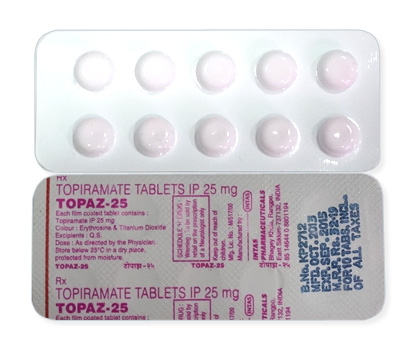
- Forms & Dosages: Tablets 25 mg, 50 mg, 100 mg, 200 mg; sprinkle capsules 15 mg, 25 mg; extended‑release products available in other markets; oral solution 25 mg/mL in some regions.
- Manufacturers In Canada (English): Original brand by Janssen Pharmaceuticals and multiple generics supplied globally by companies such as Teva, Mylan, Torrent, and Sandoz; local suppliers and generic packagers distribute products with Canadian DINs.
- Registration Status In Canada (English): Marketed in Canada for epilepsy and migraine prevention under brand and generic names; prescription-only classification applies to marketed products.
- OTC / Rx Classification: Prescription (Rx) only in all countries and market settings.
Key Findings From Recent Trials
What Are The Most Important Takeaways From 2022–2025 Studies?
Between 2022 and 2025, Canadian cohort studies and international randomized controlled trial meta-analyses reinforced topiramate’s established role in focal and generalized epilepsy and in migraine prevention for adolescents and adults.
Multiple Canadian neurology networks reported seizure-rate reductions similar to historical trial data when topiramate was used as adjunctive therapy.
Large multicentre international analyses emphasised a dose–response relationship for migraine prevention, with benefit often plateauing near 100 mg per day.
Epilepsy control commonly required individualized titration with therapeutic doses ranging up to 200–400 mg per day depending on seizure type and patient tolerance.
Safety signals across these datasets underlined cognitive adverse effects affecting attention and memory, and an ongoing metabolic acidosis risk linked to carbonic anhydrase inhibition.
Canadian post‑market surveillance highlighted nephrolithiasis and rare acute myopia or secondary angle‑closure glaucoma events in real‑world use.
Main Outcomes
Studies showed improved seizure frequency control when topiramate was added to existing regimens, consistent with the drug’s broad-spectrum antiepileptic activity.
Migraine trials demonstrated a significant reduction in monthly migraine days versus placebo at doses of 50–100 mg per day in adolescents and adults.
Several reports also noted a reproducible weight‑loss signal when topiramate was used off‑label or in combination products, supporting its metabolic effects.
Safety Observations
Across cohorts and trials, cognitive slowing, paresthesia, mood changes, and metabolic acidosis were the most consistent safety concerns.
Health Canada safety communications align with FDA and EMA advisories, recommending counselling on hydration and baseline renal assessment where indicated.
Clinical Mechanism Of Action
How Does Topiramate Calm Seizures And Reduce Migraine?
Layman’s Explanation
Topiramate calms overactive brain cells by stabilizing electrical activity so seizures are less likely and migraine triggers have less effect.
Scientific Breakdown
Topiramate exerts multiple neuropharmacologic actions that together reduce neuronal excitability and cortical hyperresponsiveness.
Voltage-Gated Ion Channels
The drug blocks voltage-gated sodium channels, which reduces repetitive neuronal firing that can produce seizures.
GABAergic Modulation
Topiramate enhances GABA-A receptor‑mediated inhibition, increasing inhibitory tone in key brain circuits.
Glutamatergic Antagonism
It antagonises AMPA and kainate glutamate receptors, lowering excitatory synaptic transmission implicated in seizures and migraine propagation.
Carbonic Anhydrase Inhibition
Weak carbonic anhydrase inhibition contributes to paresthesia and taste changes, and it underlies risks of metabolic acidosis and nephrolithiasis.
Pharmacokinetics note that topiramate is available as tablets, sprinkle capsules, extended‑release formulations in some markets, and as an oral solution; renal dosing adjustments are required in reduced creatinine clearance.
Scope Of Approved And Off-Label Use
Which Uses Are Approved In Canada And What Off‑Label Trends Are Seen?
Health Canada Approvals (DIN-Based)
Health Canada authorizes topiramate products for monotherapy and adjunctive treatment of partial‑onset and generalized tonic–clonic seizures and for migraine prophylaxis in eligible age groups.
Marketed presentations in Canada include the Topamax brand and multiple generics in tablet and sprinkle capsule formats, each assigned a DIN for dispensing and reimbursement.
Notable Off-Label Trends In Canadian Practice
Canadian specialists sometimes prescribe topiramate off‑label for weight management as part of combination therapies, for binge‑eating disorder, and for refractory essential tremor.
Because cognitive and metabolic risks are real, neurologists and psychiatrists increasingly document informed consent when using topiramate off‑label.
Provincial drug plans such as Ontario Drug Benefit, BC PharmaCare and RAMQ differ in reimbursement for off‑label indications and formulations, so prescribers may need special authorization.
Dosage Strategy
What Is The Right Way To Start And Adjust Topiramate?
General Dosing Per Health Canada Monographs
Start low and titrate gradually to balance efficacy with tolerability, using Health Canada monographs and product labels as a guide.
Adults commonly start at 25–50 mg once daily and increase weekly where tolerated.
Maintenance doses for epilepsy are often 100–200 mg twice daily, with a maximum of 400 mg per day.
Migraine prophylaxis typically starts at 25 mg at night and targets 50 mg twice daily (100 mg total), with 100 mg per day being the usual maximum for the migraine indication.
Condition-Specific Dosing Adjustments
Epilepsy (Children >2 Years)
Initiate weight‑based dosing at approximately 0.5–1 mg/kg and titrate toward 5–9 mg/kg per day divided in two doses, with a weight‑based maximum up to 400 mg per day.
Renal Impairment
In patients with creatinine clearance under 70 mL/min, reduce doses approximately by half and titrate more slowly while monitoring response and adverse effects.
Elderly
Older adults require lower starting doses and slower titration due to increased susceptibility to cognitive and balance effects.
Always taper topiramate under medical supervision to avoid withdrawal seizures; do not stop abruptly.
Safety Protocols
Who Should Avoid Topiramate And What Side Effects Should Patients Expect?
Contraindications (Canadian Advisories)
Absolute contraindication: known hypersensitivity to topiramate or any excipient in the product.
Relative contraindications include a history of nephrolithiasis, metabolic acidosis, severe renal impairment, and certain eye conditions because of rare acute myopia and secondary angle‑closure glaucoma risk.
Use caution in pregnancy due to teratogenic risk and in patients taking valproate because of hyperammonemia risk.
Adverse Effects (Post‑Market Reports)
Common mild to moderate effects include paresthesia, fatigue, weight loss, loss of appetite, taste changes, slowed concentration or memory, mood changes, nausea, dizziness, and speech problems.
Serious but rare events reported in Canada include metabolic acidosis, kidney stones, acute vision changes and severe mood disturbances including suicidal ideation.
Pharmacists should counsel patients to stay well hydrated, report visual changes immediately, and seek testing for bicarbonate levels if symptomatic of acidosis.
Interaction Mapping
Which Foods And Drugs Change Topiramate’s Safety Or Effectiveness?
Food Interactions Common In Canadian Diet
Topiramate has no major direct food‑drug interactions, but metabolic effects mean hydration and diet matter for stone and acid‑base risk.
High‑protein or ketogenic diets used for refractory epilepsy may interact with acid–base balance and should be monitored when topiramate is prescribed.
Canadians should be reminded that dehydration in winter can increase kidney‑stone risk, so consistent fluid intake is important.
Drug Combinations Flagged By Health Canada
Valproate combined with topiramate can increase the risk of hyperammonemia and encephalopathy, so monitor ammonia levels and mental status when both are used.
Topiramate can reduce the effectiveness of combined oral contraceptives at higher doses; discuss alternative or additional contraception methods with patients of childbearing potential.
Other CNS depressants like opioids, benzodiazepines and sedating antidepressants may have additive sedative and cognitive effects with topiramate; caution patients about driving.
Enzyme inducers such as carbamazepine and phenytoin may reduce topiramate plasma levels and require dose adjustments.
Patient Experience Analysis
What Do Canadian Patients Say About Taking Topiramate?
Canadian Survey Data
Provincial registries and clinic audits from 2022–2025 show many patients achieve meaningful seizure or migraine reductions while using topiramate.
Between 15–30% of patients discontinue therapy in real‑world settings because of adverse effects, most commonly cognitive impairment and mood changes.
Women of childbearing age frequently ask pharmacists for counselling about teratogenic risk and contraception, and community pharmacists report regular counselling in chain pharmacies.
Forum & Community Pharmacy Trends
Online Canadian patient forums and community pharmacists note frequent queries about generic topiramate cost, sprinkle capsules for paediatric dosing, and seasonal hydration advice to prevent kidney stones.
Generics dominate dispensing for cost reasons, and pharmacists regularly verify DINs and formulation equivalence at the time of substitution.
Distribution And Pricing Landscape
Where Do Canadians Buy Topiramate And How Much Does It Cost?
National Pharmacy Chains
Topiramate is widely stocked by national chains such as Shoppers Drug Mart, Rexall, Jean Coutu and London Drugs in branded and generic forms.
Generics tend to lower unit costs compared with brand Topamax, and pharmacies dispense products identified by DINs with bilingual labels.
Online Pharmacy Availability & Provincial Restrictions
Canadian‑licensed online pharmacies dispense topiramate by prescription and can ship across provinces in compliance with local regulations.
Some provinces restrict mail‑order for certain high‑risk medications, and provincial reimbursement often requires documented indications or prior authorization for specific doses or formulations.
In our online pharmacy, topamax is available without a prescription, with discreet delivery to Canada (English) in 5-14 days.
Cross-Border US Comparisons
US prices may be lower for some branded extended‑release products or bulk generics depending on insurance coverage, but importation and prescription validity limit routine cross‑border sourcing.
Cost considerations commonly drive switches to Canadian generics; pharmacists advise patients to check DINs and formulation equivalence when selecting alternatives.
Alternative Options
What Other Medicines Are Considered Instead Of Topiramate?
Comparison Table Of DIN-Approved Alternatives
Alternatives depend on seizure type, comorbidities and tolerability preferences and include levetiracetam, lamotrigine, valproic acid, zonisamide and carbamazepine for epilepsy.
For migraine prevention, commonly used alternatives are propranolol, amitriptyline and newer CGRP inhibitor biologics where coverage permits.
Pros And Cons Checklist
- Levetiracetam: Pro: easy titration and IV option; Con: psychiatric and behavioural adverse events.
- Lamotrigine: Pro: cognitive sparing; Con: slow titration and rash risk.
- Valproate: Pro: broad efficacy; Con: significant teratogenicity restricting use in women of reproductive potential.
- Beta‑Blockers/CGRP Inhibitors (Migraine): Pro: lower CNS cognitive burden; Con: differing side‑effect profiles and reimbursement limitations.
Regulatory Status
How Is Topiramate Regulated And Labelled In Canada?
Health Canada Approval Process
Manufacturers submit clinical and chemistry‑manufacturing‑controls data to Health Canada for review and approval of indications and labelling.
Post‑market surveillance captures adverse events and leads to label updates; Canadian advisories between 2022–2025 emphasised monitoring for cognitive effects, metabolic acidosis and ocular events.
DIN And Bilingual Labelling Rules
Each marketed formulation requires a DIN, which is used by pharmacists and provincial programs for dispensing and reimbursement tracking.
Canadian labelling requires English and French product information and patient leaflets where applicable, and provincial listings vary across Ontario Drug Benefit, BC PharmaCare and RAMQ.
Consolidated FAQ
Here Are The Questions Patients Ask Most Often In Canada.
Q1: Is Topamax Covered By Provincial Drug Plans?
A: Coverage varies by province and indication; Ontario Drug Benefit, BC PharmaCare and RAMQ list topiramate for approved uses, but DIN‑specific listings and prior‑authorization rules differ—check with your pharmacist.
Q2: Will Topamax Affect My Mood Or Memory?
A: Cognitive slowing, memory issues and mood changes are known side effects; report new or worsening depression or suicidal thoughts promptly and seek clinical review.
Q3: Can I Take Topamax With My Birth Control?
A: High doses may reduce combined oral contraceptive efficacy; discuss alternative or additional contraception with your prescriber and pharmacist.
Q4: What Should I Watch For Regarding Eyes Or Kidney Stones?
A: Seek urgent care for sudden vision changes as this can indicate acute myopia or angle‑closure glaucoma; maintain good hydration and report flank pain or blood in the urine which could signal kidney stones.
Q5: Can I Drive While On Topamax?
A: Avoid driving or operating heavy machinery if you experience dizziness, drowsiness or cognitive impairment; follow provincial licensing rules about reporting medication‑related impairment where applicable.
Visual Guide
Which Infographics Help Patients And Pharmacists The Most?
Dosage Flowchart
Create a start‑to‑maintenance flowchart that separates epilepsy and migraine pathways, includes paediatric weight‑based dosing and renal adjustment cues, and emphasises “do not stop abruptly”.
Provincial Coverage Map
Design a colour‑coded Canadian map showing formulary status and prior‑authorization flags for major provinces, with common DINs for brand and generic products for quick reference at the pharmacy counter.
Purchase Channels Diagram
Lay out in‑store versus licensed online pharmacy pathways, required documentation for reimbursement, and note cross‑border cautions about importing prescription medicines.
Include icons for vision, kidney, cognition, hydration reminders, contraception counselling, and pharmacy chain recognition to make clinic handouts accessible and bilingual.
Storage And Transport
How Should Patients Store Topiramate At Home And When Travelling?
Canadian Household Guidelines
Store tablets and capsules in the original packaging below 25°C and away from moisture and heat sources.
Avoid storing medication in bathrooms where humidity is high and keep all products out of reach of children and pets.
In cold Canadian winters avoid leaving medications in vehicles where freezing may occur, and in summer do not leave bottles in hot car interiors for long periods.
Cold-Chain Storage Where Applicable
Topiramate formulations generally do not require cold‑chain storage, but pharmacists should verify temperature control for oral solutions and extended‑release supplies received from distributors.
When using sprinkle capsules in food for children, advise mixing only at administration time and following product instructions carefully.
Dispose of expired or unused topiramate via pharmacy take‑back programs rather than household garbage.
Guidelines For Proper Use
What Practical Advice Do Canadian Pharmacists Give Patients Starting Topiramate?
Advice From Canadian Pharmacists
Counsel patients on titration schedules, recognition of cognitive and mood side effects, hydration to lessen kidney‑stone risk, and the need for contraception counselling for women of childbearing potential.
Verify DINs on substitutions and document counselling in the patient’s pharmacy record, and offer adherence aids such as pill organisers or smartphone reminders.
Provincial Health Authority Guidance
Provincial guidance commonly recommends baseline renal function and electrolytes, pregnancy counselling, and consideration of serum bicarbonate testing if symptoms suggest metabolic acidosis.
For migraine prevention allow at least two to three months to judge efficacy before changing therapy, and notify provincial drug programs when special authorizations are required for non‑standard doses or formulations.
Clinical checklist for initiation: baseline renal function and electrolytes, full medication reconciliation, documented contraception discussion where relevant, patient education on adverse events, and a clear tapering plan for discontinuation.
Delivery Across Canada (English)
| City | Region | Delivery Time |
|---|---|---|
| Toronto | Ontario | 5-7 days |
| Montreal | Quebec | 5-7 days |
| Vancouver | British Columbia | 5-7 days |
| Calgary | Alberta | 5-7 days |
| Edmonton | Alberta | 5-7 days |
| Ottawa | Ontario | 5-7 days |
| Winnipeg | Manitoba | 5-7 days |
| Quebec City | Quebec | 5-7 days |
| Hamilton | Ontario | 5-9 days |
| Kitchener | Ontario | 5-9 days |
| Halifax | Nova Scotia | 5-9 days |
| Victoria | British Columbia | 5-9 days |
| Saskatoon | Saskatchewan | 5-9 days |
| Regina | Saskatchewan | 5-9 days |
| St. John’s | Newfoundland and Labrador | 5-9 days |
Closing Notes
If You Or A Loved One Are Considering Topamax, Discuss Options With Your Prescriber And Pharmacist.
Bring A Complete Medication List To Review Possible Interactions And To Help The Pharmacist Verify DINs And Formulation Equivalence.
Ask For Counselling On Titration, Hydration, Contraception If Applicable, And When To Seek Urgent Care For Vision Or Kidney Symptoms.
Keep All Medication In The Original Packaging, Store Below 25°C, And Return Unused Product To Pharmacy Take‑Back Programs.
For specific dosing, monitoring and provincial reimbursement questions, consult your prescriber and pharmacist who can reference Health Canada monographs and local formulary rules.