
Zoloft
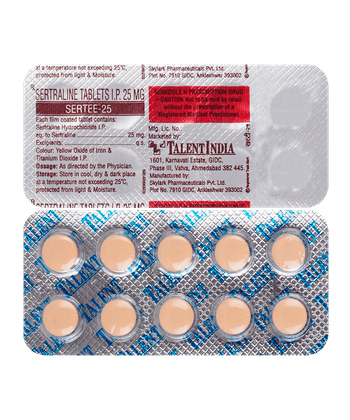
Zoloft
- You may be able to buy Zoloft (sertraline) from some online pharmacies, but it is a prescription-only medicine in Canada and most countries. It should be obtained only with a valid prescription from a licensed healthcare professional.
- Zoloft is used to treat major depressive disorder, obsessive-compulsive disorder, panic disorder, post-traumatic stress disorder, social anxiety disorder, and premenstrual dysphoric disorder. It is a selective serotonin reuptake inhibitor (SSRI) that works by increasing serotonin activity in the brain.
- The usual dose depends on the condition: 25–50 mg once daily to start, with typical maintenance doses of 50–200 mg daily. The maximum daily dose is usually 200 mg.
- Zoloft is available as film-coated tablets in 25 mg, 50 mg, and 100 mg strengths, and as an oral concentrate/solution of 20 mg/mL that must be diluted before use.
- Zoloft usually starts to work within 1–4 weeks, although some people may notice early changes sooner.
- The duration of action is about 24 hours, so it is taken once daily. Full treatment courses are often needed for 6–12 weeks or longer, depending on the condition.
- Alcohol is not recommended while taking Zoloft, as it may worsen drowsiness, dizziness, impaired judgement, and other side effects.
- The most common side effects include nausea, diarrhoea, insomnia, headache, dizziness, dry mouth, fatigue, sweating, and sexual side effects such as decreased libido or delayed ejaculation.
- Would you like to try Zoloft, but only after speaking with a healthcare professional and getting the right prescription?
Key Findings From Recent Trials And Real-World Evidence
- INN (International Nonproprietary Name): Sertraline
- Brand names available in Canada (English): Zoloft
- ATC Code: N06AB06
- Forms & dosages: Tablets 25 mg, 50 mg, 100 mg; oral concentrate 20 mg/mL
- Manufacturers in Canada (English): Pfizer Canada Inc.
- Registration status in Canada (English): Approved, DIN publicly searchable
- OTC / Rx classification: Prescription Only (Rx)
People often want the short answer first: does zoloft still hold up in day-to-day practice?
Recent trials and real-world evidence from 2022 to 2025 continue to support sertraline for major depressive disorder, OCD, panic disorder, PTSD, social anxiety, and PMDD.
Across studies, its effectiveness appears broadly comparable to other SSRIs, so tolerability, past response, and drug coverage often drive the final choice more than raw efficacy.
That matches what Canadian pharmacists see in practice, where sertraline is frequently selected because it comes in flexible strengths such as 25 mg, 50 mg, and 100 mg.
For Canadian patients, the practical details matter too.
Sertraline is listed under ATC code N06AB06, and Canadian forms include tablets in 25 mg, 50 mg, and 100 mg strengths, plus an oral concentrate at 20 mg/mL.
Symptom improvement is commonly noticed within 1 to 4 weeks, but acute treatment usually needs at least 6 to 12 weeks before judging the full response.
For patients at high risk of relapse, maintenance treatment may continue for months or even years.
Common adverse effects still include nausea, insomnia, sexual dysfunction, sweating, dizziness, and fatigue.
Safety concerns to watch for are serotonin syndrome with interacting drugs, bleeding risk, and activation or mania in bipolar disorder.
Basic Zoloft Information
- INN (International Nonproprietary Name): Sertraline
- Brand names available in Canada (English): Zoloft
- ATC Code: N06AB06
- Forms & dosages: Tablets 25 mg, 50 mg, 100 mg; oral concentrate 20 mg/mL
- Manufacturers in Canada (English): Pfizer Canada Inc.
- Registration status in Canada (English): Approved, DIN publicly searchable
- OTC / Rx classification: Prescription Only (Rx)
Clinical Mechanism Of Action
What actually makes zoloft help with mood and anxiety symptoms?
In plain language, sertraline raises serotonin availability in the brain, which may improve mood, reduce intrusive thoughts, and ease anxiety.
That is why it is used for depression and a range of anxiety-related disorders, but it does not work instantly.
Most patients need several weeks before the full benefit shows up.
Scientifically, sertraline is a selective serotonin reuptake inhibitor, or SSRI.
It blocks the serotonin transporter, known as SERT, which increases serotonin signalling at synapses.
It is classified as N06AB06 and is prescription-only in Canada.
The oral concentrate is 20 mg/mL and must be diluted before use, which is an important pharmacy counselling point.
This mechanism explains both the benefits and the familiar side effects, including nausea, agitation, and sexual dysfunction.
Scope Of Approved And Off-Label Use
Patients often ask whether sertraline is only for depression, or whether it has a wider role.
In Canada, sertraline is approved through a DIN-based product registration system and is used for major depressive disorder, OCD, panic disorder, social anxiety, PTSD, and PMDD.
In routine practice, clinicians may also use it off-label for selected anxiety-related symptoms when guideline-based alternatives are not suitable.
That usually happens in more complex patients, especially when depression and anxiety overlap, or when another SSRI caused side effects.
Provincial plans such as Ontario Drug Benefit, BC PharmaCare, and RAMQ may reimburse sertraline differently depending on indication, age, or formulary rules.
Canadian patients may see Zoloft tablets 25 mg, 50 mg, and 100 mg, as well as oral concentrate 20 mg/mL.
For a person trying to fill a prescription after work on Friday, the key question is usually whether the pharmacy has the right strength in stock and whether the plan will cover it.
Dosage Strategy
How much zoloft is enough, and when should the dose change?
For adults, the common starting dose is 50 mg once daily for major depressive disorder and OCD.
For panic disorder, PTSD, and social anxiety, treatment often begins at 25 mg daily and is then titrated upward.
The typical maximum daily dose is 200 mg, while PMDD usually tops out at 150 mg per day.
Children with OCD often start at 25 mg daily between ages 6 and 12, with cautious titration.
Older adults should generally start low and move slowly because they can be more sensitive to adverse effects.
In liver impairment, dose reduction or a longer dosing interval is recommended because clearance is reduced.
In severe renal impairment, no fixed dose adjustment is given, but caution is still appropriate.
From a Canadian dispensing point of view, the available strengths of 25 mg, 50 mg, and 100 mg make gradual titration practical.
Safety Protocols
What should patients be warned about before starting zoloft?
Do not use sertraline with MAOIs or pimozide, and do not use the concentrate with disulfiram.
It should also be avoided in people with known hypersensitivity to sertraline or excipients.
There is no safety data supporting use in children under 6 years.
The most common side effects are nausea, diarrhea, insomnia, drowsiness, headache, tremor, dizziness, sweating, fatigue, and sexual dysfunction.
Post-market safety concerns include serotonin syndrome, hyponatraemia, bleeding tendency, and a switch into mania in bipolar disorder.
Clinicians also watch for suicidal ideation early in treatment, especially in younger patients, plus agitation after dose increases.
Weight change, sleep disturbance, and persistent sexual side effects deserve follow-up rather than being brushed off.
A quick example from practice: a patient who feels “wired” after a dose increase should not just wait it out without checking in, because activation can matter clinically.
Interaction Mapping
Can sertraline be taken with food, alcohol, or other common medications?
It can be taken with or without food, although food may help reduce nausea.
Alcohol has no special pharmacokinetic interaction, but it can worsen sedation and mood symptoms, so it is best kept minimal or avoided.
Higher-risk drug combinations include MAOIs, linezolid, pimozide, triptans, other serotonergic drugs, certain opioids, and St. John’s wort.
NSAIDs, aspirin, and anticoagulants can raise bleeding risk when used with sertraline.
Canadian pharmacy screening also needs to include over-the-counter products from places such as Shoppers Drug Mart, Rexall, Jean Coutu, and London Drugs.
That matters because interaction risk is not limited to prescriptions.
Ask about migraine products, cough and cold medicines, supplements, and herbal products every time.
Patient Experience Analysis
What do Canadian patients usually notice first with zoloft?
Patient reports tend to focus on trade-offs between symptom relief and early side effects such as nausea, sleep disruption, or sexual changes.
If those side effects show up early and the patient is not warned that benefits may take weeks, adherence often drops.
Many people also ask about brand versus generic sertraline.
Clinically, the active ingredient is the same, but excipients and appearance can differ.
That difference in packaging can matter more than expected, especially for patients who are sensitive to change or who rely on visual cues to stay organized.
In community pharmacy conversations, people often ask whether sertraline helps anxiety as well as depression, whether it causes weight gain, and whether their provincial plan covers the product.
Those are practical questions, and they are usually the ones that decide whether a prescription gets filled and continued.
Distribution And Pricing Landscape
Where can Canadian patients actually get zoloft, and what affects the price?
Zoloft and generic sertraline are commonly dispensed through major chains such as Shoppers Drug Mart, Rexall, Jean Coutu, and London Drugs.
Stock can vary by strength, especially for less common dose combinations or the oral concentrate.
Online Canadian pharmacies may list sertraline 50 mg, sertraline 100 mg, or the 20 mg/mL oral solution, but a valid prescription is still required for dispensing in Canada.
Provincial plan rules can change out-of-pocket cost and whether brand substitution is allowed.
Patients also compare Canadian prices with U.S. retail prices, where generic competition can make the numbers look quite different.
Cross-border buying sounds tempting, but prescription rules, import limits, and provincial coverage often make domestic dispensing simpler and safer.
For access, our online pharmacy can help patients review options and arrange discreet delivery to Canada in 5 to 14 days, even when coverage or stock questions are part of the process.
Alternative Options
Is there a better SSRI than zoloft?
There is no universal best choice, because response and tolerability vary from person to person.
Common DIN-approved alternatives include fluoxetine, paroxetine, citalopram, and escitalopram.
Sertraline is often favoured for flexible dosing and broad evidence in anxiety-spectrum conditions.
Fluoxetine has a long half-life and can feel activating for some patients.
Paroxetine tends to have more anticholinergic burden and more discontinuation issues.
Citalopram and escitalopram are often well tolerated, but QT and dose-limit considerations may apply.
In real practice, matching the SSRI to the patient matters more than brand recognition.
That is especially true when prior response, side effects, and coverage are already part of the decision.
Regulatory Status
How is sertraline regulated in Canada?
Sertraline is an approved prescription medicine in Canada, and products are identified by a DIN.
Health Canada approval requires evidence of quality, safety, and efficacy, with ongoing pharmacovigilance after market entry.
Canadian packaging commonly includes bilingual English and French labelling, depending on the product and distribution requirements.
Tablets are supplied as 25 mg, 50 mg, and 100 mg, while the oral concentrate is 20 mg/mL.
Packaging can differ from the United States or European Union in colour, blister format, and excipients.
Brand and generic products may be interchangeable at the pharmacy level, although provincial substitution rules and supply issues can affect what is dispensed.
Prescription-only status applies across Canada, so zoloft is not an OTC medication.
Consolidated FAQ
How long does Zoloft take to work? Usually 1 to 4 weeks, with full benefit sometimes taking longer.
Can I take sertraline with food? Yes. Taking it with food may help nausea.
What strengths are available in Canada? 25 mg, 50 mg, and 100 mg tablets, plus 20 mg/mL oral concentrate.
Is generic sertraline the same as Zoloft? It contains the same INN, sertraline, though packaging and excipients may differ.
Can my provincial plan cover it? Often yes, but coverage depends on the plan, formulary, and prescribing criteria.
Visual Guide
A simple visual can make sertraline dosing much easier to understand.
A dose ladder works well: 25 mg, then 50 mg, then 100 mg, with a possible increase up to 200 mg per day where appropriate.
A second visual can show common Canadian coverage pathways such as private insurance, Ontario Drug Benefit, BC PharmaCare, and RAMQ.
A third can map the usual pharmacy flow: prescriber, pharmacy, pharmacist counselling, then refill or switch if needed.
It also helps to show tablet versus oral concentrate, and brand versus generic labels.
Many patients find a Canada versus U.S. pricing snapshot useful for context when they are deciding where and how to fill a prescription.
Storage And Transport
Where should sertraline be kept at home?
Store it at 20 to 25°C, away from moisture and excess heat.
Keep tablets in the original packaging and out of reach of children.
The oral concentrate should be protected from light and always diluted before use.
Sertraline does not require refrigeration or any cold chain handling.
For travel, the original prescription bottle or box is the safest way to carry it, especially across provincial or international borders.
Keeping the medicine in carry-on luggage helps avoid extreme temperatures during transit.
That simple step saves a lot of headaches on long weekends and holiday travel.
Delivery Across Canada (English)
| City | Region | Delivery Time |
|---|---|---|
| Toronto | Ontario | 5-7 days |
| Montreal | Quebec | 5-7 days |
| Vancouver | British Columbia | 5-7 days |
| Calgary | Alberta | 5-7 days |
| Ottawa | Ontario | 5-7 days |
| Edmonton | Alberta | 5-7 days |
| Winnipeg | Manitoba | 5-7 days |
| Quebec City | Quebec | 5-7 days |
| Halifax | Nova Scotia | 5-7 days |
| Victoria | British Columbia | 5-7 days |
| Saskatoon | Saskatchewan | 5-9 days |
| Regina | Saskatchewan | 5-9 days |
| St. John's | Newfoundland and Labrador | 5-9 days |
| Charlottetown | Prince Edward Island | 5-9 days |
Guidelines For Proper Use
How should zoloft be taken day to day?
Take sertraline at the same time every day.
If a dose is missed, take it when remembered unless it is close to the next dose, and do not double up.
Report persistent nausea, insomnia, agitation, sexual dysfunction, or suicidal thoughts.
Canadian treatment guidance generally supports individualized dosing, gradual titration, and regular follow-up.
If switching brands or strengths, double-check the dose because tablets come in 25 mg, 50 mg, and 100 mg strengths.
Patients should ask about coverage, refill timing, and whether the pharmacy can substitute a generic if needed.
Overdose symptoms can include somnolence, vomiting, tachycardia, agitation, and nausea, and urgent medical care is needed right away.
There is no specific antidote, so treatment is supportive.
Storage And Transport
Where should sertraline be kept at home?
Store it at 20 to 25°C, away from moisture and excess heat.
Keep tablets in the original packaging and out of reach of children.
The oral concentrate should be protected from light and always diluted before use.
Sertraline does not require refrigeration or any cold chain handling.
For travel, the original prescription bottle or box is the safest way to carry it, especially across provincial or international borders.
Keeping the medicine in carry-on luggage helps avoid extreme temperatures during transit.
That simple step saves a lot of headaches on long weekends and holiday travel.