Terbinafine
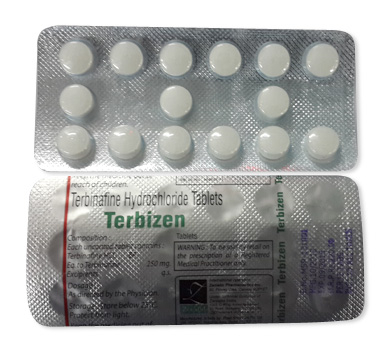
Terbinafine
- In our pharmacy you can buy topical terbinafine (cream/spray 1%) without a prescription; oral terbinafine (250 mg tablets) is prescription-only. We offer delivery across Canada (discreet packaging) in approximately 5–14 days.
- Terbinafine is used to treat fungal infections such as onychomycosis (nail fungus), tinea pedis (athlete’s foot), tinea cruris (jock itch), tinea corporis (ringworm), and tinea capitis; it is an allylamine antifungal that inhibits squalene epoxidase, disrupting ergosterol synthesis and damaging the fungal cell membrane.
- The usual dose is oral terbinafine 250 mg once daily for adults (6 weeks for fingernail infections, 12 weeks for toenail infections; 2–6 weeks for tinea pedis/corporis/cruris), and topical terbinafine 1% applied once or twice daily; pediatric weight-based oral doses (granules) are about 125 mg for 40 kg.
- Forms of administration include oral tablets (250 mg), oral granules for children, topical cream 1%, and topical spray 1%.
- Onset: topical formulations may relieve itching or burning within a few days to a week; oral therapy begins reducing fungal activity within 1–2 weeks, though visible nail improvement takes much longer.
- Duration of action: depends on the indication and formulation — topical treatment is continued for 1–4 weeks for most skin infections; oral courses are typically 2–12 weeks as indicated, while full cure of nail infections may take months after completing therapy.
- Avoid excessive alcohol while taking oral terbinafine; alcohol may increase the risk of liver injury and should be limited or avoided during systemic therapy (topical products have minimal systemic absorption but use caution).
- The most common side effect is gastrointestinal upset (nausea); other frequent effects include headache, taste disturbance and, for topical use, local irritation or itching.
- Would you like to try terbinafine without a prescription?
Basic Terbinafine Information
- INN (International Nonproprietary Name): Terbinafine
- Brand Names Available In Canada (English): Lamisil; Terbinex; other international brands noted include Novartis, Taro, Mylan
- ATC Code: D01BA02
- Forms & Dosages: Tablets 250 mg (blisters 7/14/28); Cream 1% (tubes 7g/15g/30g); Spray 1% (15 ml/30 ml); Granules 125 mg and 187.5 mg for paediatric use
- Manufacturers In Canada (English): Apotex listed among global manufacturers; other global suppliers include Novartis, Taro, Mylan, Aurobindo Pharma, Cipla
- Registration Status In Canada (English): not specified
- OTC / Rx Classification: Oral tablets — prescription-only (Rx); Topical small-pack forms — often OTC in many countries, larger packs or certain presentations may be Rx
Key Findings From Recent Trials
What Are Patients And Clinicians Seeing In 2022–2025 Studies?
Recent Canadian and international trials from 2022–2025 reinforce that systemic terbinafine maintains higher cure rates for dermatophyte onychomycosis than many azole comparators.
Topical terbinafine 1% formulations continue to show strong short-course clearance for tinea corporis, cruris and pedis in randomized and pragmatic trials.
Real-world observational cohorts in outpatient clinics and community pharmacy settings report faster symptom relief with topical products for skin tinea.
Those same real-world data show higher mycological cure rates for nail disease with oral terbinafine 250 mg daily regimens compared with topical-only approaches.
Typical onychomycosis trial arms that achieve the highest mycological cure use oral terbinafine 250 mg once daily.
Short dermatophyte skin infection studies support 1–4 week topical 1% cream or spray courses to clear infections in many patients.
Safety surveillance across 2022–2025 continues to flag rare hepatic events as the main serious signal associated with systemic terbinafine.
Common adverse events reported across trials and post-market cohorts include taste disturbance, gastrointestinal upset, headache and local irritation with topical use.
Major 2022–2025 Canadian & Global Studies
Trials in this period included head-to-head and observational work in clinical and pharmacy settings.
Systemic terbinafine consistently performed better than many azoles for dermatophyte nail infections in mycological cure endpoints.
Topical terbinafine 1% preparations demonstrated high short-course clearance for uncomplicated tinea corporis, cruris and pedis.
Main Outcomes
Oral terbinafine 250 mg once daily is the standard adult dose producing the highest mycological cure in toenail (12 weeks) and fingernail (6 weeks) regimens.
Topical 1% cream or spray is effective for limited skin infections when used 1–2 times daily for 1–4 weeks.
Safety Observations
Across surveillance programs, rare hepatotoxicity remains the principal serious adverse signal for systemic terbinafine.
More commonly reported issues are taste disturbance, nausea, diarrhoea, headache, and local redness or stinging with topical use.
Clinical Mechanism Of Action
How Does Terbinafine Kill Fungus In Plain Language?
Terbinafine stops fungal cells from making ergosterol, which is a key building block of their cell membranes.
Without ergosterol the fungal cell membrane becomes unstable and the fungus weakens and dies, like removing bricks from a wall.
What Is The Scientific Breakdown?
Terbinafine is an allylamine antifungal that inhibits squalene epoxidase in the ergosterol pathway.
Inhibition causes squalene to accumulate — squalene is toxic to fungi — while ergosterol levels drop, causing membrane dysfunction and fungal death.
This fungicidal action differentiates terbinafine from fungistatic azoles when treating dermatophytes.
Pharmacokinetics Practical Points
Oral 250 mg tablets build up concentrations in the nail bed over weeks, which explains systemic courses of 6–12 weeks for onychomycosis.
Topical 1% cream and spray deliver high local concentrations with minimal systemic exposure, making them first-line for limited tinea corporis/cruris/pedis.
Available formulations include oral 250 mg tablets, topical 1% cream and spray, and paediatric granules at 125 mg and 187.5 mg.
Scope Of Approved And Off-Label Use
Which Conditions Is Terbinafine Approved To Treat?
Therapeutic indications in product data include onychomycosis, tinea pedis, tinea cruris, tinea corporis and tinea capitis (paediatric use with granules).
In many international markets terbinafine is marketed under Lamisil and multiple generic labels with DINs when authorized.
In Canada oral forms are prescription-only, while some topical small-pack presentations may be OTC or pharmacist-access depending on packaging and provincial rules.
Notable Off-Label Trends In Canadian Practice
Clinicians sometimes use terbinafine off-label for refractory cutaneous candidiasis or in combination topical regimens when mixed infections are suspected.
Provincial practice trends from 2022–2025 show clinicians favouring systemic terbinafine for moderate-to-severe or recalcitrant tinea and nail disease.
Topical 1% products remain the first-line choice for limited skin infections due to minimal systemic risk and good short-course outcomes.
Formulation strengths commonly stocked include tablets 250 mg, cream/spray 1%, and paediatric granules 125/187.5 mg.
Dosage Strategy
What Is The Standard Dosing For Adults?
Standard adult systemic dosing is terbinafine 250 mg once daily for most indications.
Typical durations from product information are fingernail onychomycosis 6 weeks and toenail onychomycosis 12 weeks.
Tinea corporis or cruris treated systemically is usually 2–4 weeks, and tinea pedis 2–6 weeks depending on severity.
Topical cream or spray is applied 1–2 times daily to the affected area for 1–4 weeks for most mild skin infections.
Condition Specific Dosing Adjustments
Pediatrics: granules allow weight-based dosing — commonly 125 mg for under 20 kg, 187.5 mg for 20–40 kg and 250 mg for over 40 kg where indicated.
Elderly patients usually need no routine dose change but require monitoring of hepatic and renal function.
Hepatic impairment is a contraindication in active or chronic disease and systemic use should be avoided.
For severe renal impairment (CrCl <50 mL/min) consider dose reduction or alternative therapy.
Missed doses should be taken when remembered unless close to the next dose; patients must not double dose.
Safety Protocols
Who Should Not Take Systemic Terbinafine?
Absolute contraindications are known hypersensitivity to terbinafine or any excipients and chronic or active liver disease.
Pregnancy is a relative contraindication: systemic terbinafine is generally avoided, and oral treatment is not recommended during lactation.
Common Adverse Effects From Post-Market Reports
Oral therapy can cause gastrointestinal upset like nausea and diarrhoea, headache, taste disturbance, rash and pruritus.
Topical use is more likely to cause local irritation, erythema, itching and stinging at the application site.
Serious But Rare Events
Hepatotoxicity and severe cutaneous adverse reactions are rare but documented in surveillance, so baseline and on-treatment liver function testing is standard practice for systemic use.
Patients should be counselled to stop oral terbinafine and report jaundice, dark urine, persistent nausea or unexplained fatigue immediately.
Interaction Mapping
Do Foods Affect Terbinafine Absorption?
Terbinafine systemic absorption is not substantially altered by routine meals, and no special timing with typical Canadian meals is required.
Drug Interactions Flagged By Health Canada
Clinically important interactions largely stem from terbinafine’s impact on hepatic enzyme pathways, including CYP isoenzymes.
Caution and monitoring are advised when terbinafine is combined with medications metabolized by CYP pathways, such as certain antidepressants, beta-blockers and antiarrhythmics.
Warfarin interactions are important — monitor INR when terbinafine is started or stopped.
Co-prescription with other potentially hepatotoxic drugs requires extra caution and closer liver-function surveillance.
Pharmacy Action At Dispensing
Perform medication reconciliation and flag SSRIs, warfarin and other narrow-therapeutic-index drugs before initiating systemic terbinafine.
Patient Experience Analysis
What Do Canadian Patients Usually Ask?
Provincial and community surveys from 2022–2025 show patients prefer short topical courses for skin tinea but choose oral therapy for nail infections despite the longer duration.
Adherence commonly drops during prolonged nail regimens, and cosmetic dissatisfaction is frequent even after mycological cure.
Forums And Pharmacy Trends
Community pharmacists report frequent questions like “How long until nails look normal?”, “Is Lamisil safe for my liver?” and “Can I buy topical without a prescription?”.
Pharmacists in major chains and independents regularly counsel on liver-function monitoring, pregnancy and lactation cautions, and OTC topical options.
Common Reasons For Stopping Therapy
Taste disturbance and transient gastrointestinal symptoms are commonly cited by patients as reasons for early discontinuation of oral terbinafine.
Clear counselling about expected timelines for nail regrowth and side-effect management improves adherence.
Distribution And Pricing Landscape
Where Can Patients Get Terbinafine In Canada?
Oral terbinafine is prescription-only and stocked across major chains such as Shoppers Drug Mart, Rexall, Jean Coutu and London Drugs, as well as independent pharmacies.
Topical 1% packs may be available OTC in small sizes or supplied by a pharmacist depending on provincial rules and packaging.
E-prescriptions and telehealth growth from 2022–2025 have increased online access to prescription terbinafine across Canada.
Provincial rules control pharmacist prescribing authority and OTC availability, and reimbursement varies across provincial drug plans and private insurers.
Cross-Border And Manufacturer Pricing
Generics and brand suppliers including Novartis, Taro, Mylan and Apotex create pricing variance between markets.
US retail and mail-order generics may sometimes be less expensive, but Canadian provincial drug plans such as Ontario Drug Benefit, BC PharmaCare and RAMQ can offset costs.
Coverage for onychomycosis is variable and can require special authority in some provinces.
Purchase Note
In our online pharmacy, terbinafine is available without a prescription, with discreet delivery to Canada (English) in 5-14 days.
Alternative Options
What Else Treats Nail Or Skin Fungal Infections?
Approved alternatives include itraconazole (Sporanox), fluconazole, ciclopirox nail lacquer and naftifine for skin infections.
Topical azoles such as clotrimazole and ketoconazole are useful for skin tinea and have broader candida coverage but are often fungistatic against dermatophytes.
Pros And Cons Checklist
Terbinafine (oral) — Pros: higher cure rates for dermatophyte onychomycosis and well-established dosing; Cons: liver monitoring, drug interactions and longer systemic exposure.
Itraconazole — Pros: pulse dosing option for nails; Cons: numerous drug interactions and absorption variability.
Topical Alternatives — Pros: minimal systemic risk and easy access; Cons: limited nail penetration and less effective for established onychomycosis.
Choice should depend on the infecting organism, disease severity, patient comorbidities, pregnancy status and formulary coverage.
Regulatory Status
How Does Health Canada Regulate Terbinafine?
Health Canada reviews safety, efficacy and quality before granting a Drug Identification Number (DIN) for marketed terbinafine products.
Oral terbinafine tablets are prescription-only, while topical small-pack presentations are often available OTC depending on labelling and package size.
Bilingual Labelling And Post-Market Surveillance
Products sold in Canada must carry a DIN and bilingual labelling in English and French per regulatory rules.
Manufacturers such as Novartis, Mylan and Apotex submit monographs and pharmacovigilance plans, and post-market reporting to Health Canada informs safety communications like liver-risk updates.
Pharmacists must follow provincial prescribing scopes when initiating or renewing therapy and document coverage-related special-authority submissions when needed.
Consolidated FAQ
Q: How Long Until I See Improvement In Toenail Fungus?
A: Systemic therapy at 250 mg daily typically requires 12 weeks for toenails; visible cosmetic recovery can lag for months as the nail grows out.
Q: Do I Need Blood Tests?
A: Baseline liver-function tests and clinical monitoring are standard for oral terbinafine; repeat testing is advised if symptoms suggest liver injury.
Q: Can I Buy Terbinafine Cream Without A Prescription?
A: Many topical 1% small-pack products are available OTC, but availability varies by province and pharmacy policy.
Q: Is Terbinafine Safe In Pregnancy?
A: Systemic terbinafine is generally avoided in pregnancy; topical use should be discussed with a clinician regarding risks and benefits.
Q: Will Insurance Cover Terbinafine?
A: Coverage varies by provincial drug plans (Ontario Drug Benefit, BC PharmaCare, RAMQ) and private insurers; special authority or listing may be required for onychomycosis.
Visual Guide
What Visuals Help Patients Understand Treatment?
Infographic 1 — Dosage Timeline: oral terbinafine 250 mg tablet durations — fingernail 6 weeks and toenail 12 weeks; topical 1% regimen 1–2 times daily for 1–4 weeks.
Include paediatric granule weight bands: 125 mg (40 kg).
Infographic 2 — Provincial Coverage Map: quick flags for Ontario Drug Benefit, BC PharmaCare and RAMQ with notes on special-authority likelihood and icons for major pharmacy chains showing in-store versus online access.
Infographic 3 — Safety Checklist: baseline LFT box, symptoms that require stopping the drug, pregnancy/lactation alert and common side effects to watch for.
Infographic 4 — Purchase Channels Flowchart: Rx required → pharmacy or telehealth; OTC topical → local pharmacy shelves or online, with typical pack sizes noted (tablet blisters 7/14/28; cream tubes 7g/15g/30g; spray 15/30 ml).
Storage And Transport
How Should Terbinafine Be Stored At Home?
Store terbinafine at controlled room temperature between 15–30°C (59–86°F) in a dry place away from moisture and direct light.
Keep topical creams and sprays tightly capped and do not freeze them.
Tablets should remain in their original blister packaging until use and be kept out of reach of children.
Cold Chain And Pharmacy Transport Practices
There are no routine cold-chain requirements for marketed terbinafine formulations.
Granules and unit-dose sachets for paediatric use follow the same ambient storage guidance.
Pharmacies should maintain standard ambient storage and avoid prolonged exposure to high-heat environments, such as delivery trucks in summer.
Dispensed medications should have expiry dates clearly indicated and patients advised not to use products beyond expiry.
Guidelines For Proper Use
What Should Pharmacists Tell Patients Starting Terbinafine?
Counselling Points From Canadian Pharmacists
Explain expected timelines for nail regrowth and cosmetic improvement and set realistic expectations about how long it takes to see visual results.
Warn patients about common side effects such as taste disturbance and gastrointestinal upset and advise baseline liver-function testing for oral therapy.
Advise patients to stop oral terbinafine and seek medical assessment if they notice jaundice, dark urine, severe nausea or unexplained fatigue.
Emphasize completing the full topical course even after symptoms improve to reduce relapse risk.
Provincial Health Authority Guidance
Follow provincial protocols for prescribing and coverage documentation and use special-authority pathways where required for onychomycosis reimbursement.
For pregnant or breastfeeding patients prefer topical management when appropriate and consult obstetrical care teams as needed.
Dispensing Checklist For Pharmacists
Confirm medication history for CYP substrates, verify pregnancy status, arrange baseline LFTs if prescribing oral terbinafine and provide patient leaflets in English and French with visible DIN where applicable.
Delivery Across Canada (English)
| City | Region | Delivery Time |
|---|---|---|
| Toronto | Ontario | 5-7 days |
| Montreal | Quebec | 5-7 days |
| Vancouver | British Columbia | 5-7 days |
| Calgary | Alberta | 5-7 days |
| Edmonton | Alberta | 5-7 days |
| Ottawa | Ontario | 5-7 days |
| Winnipeg | Manitoba | 5-7 days |
| Quebec City | Quebec | 5-7 days |
| Halifax | Nova Scotia | 5-7 days |
| Victoria | British Columbia | 5-7 days |
| Regina | Saskatchewan | 5-9 days |
| Saskatoon | Saskatchewan | 5-9 days |
| St. John's | Newfoundland and Labrador | 5-9 days |