Oxybutynin
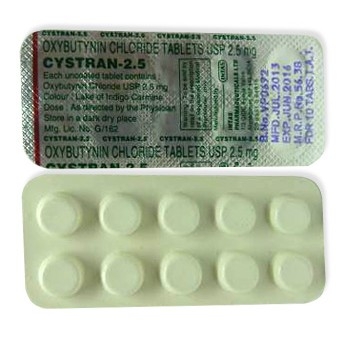
Oxybutynin
- In our pharmacy, you can buy oxybutynin without a prescription, with delivery in 5–14 days throughout Canada (English). Discreet and anonymous packaging.
- Oxybutynin is used to treat overactive bladder, urge incontinence and urinary frequency; it is an antimuscarinic (anticholinergic) that blocks M3 receptors on the bladder detrusor muscle to reduce involuntary contractions.
- The usual dose is: immediate‑release 5 mg orally 2–3 times daily (max 20 mg/day); extended‑release 5–10 mg once daily (may titrate to 30 mg/day); transdermal patch delivering 3.9 mg/24 h applied twice weekly; topical gel 100 mg once daily; paediatric dosing often starts at 5 mg twice daily for children 5+.
- Administration forms include oral tablets and syrup, extended‑release tablets, transdermal patch and topical gel.
- Onset: immediate‑release tablets typically begin to work within 30–60 minutes; extended‑release and topical forms may show effect within 24 hours; the patch may begin to reduce symptoms within 24 hours with fuller effect over several days.
- Duration of action: immediate‑release about 6–8 hours; extended‑release approximately 24 hours; the patch provides continuous delivery for about 72–96 hours (applied twice weekly); the gel provides roughly 24 hours of effect.
- Alcohol warning: avoid or limit alcohol—concurrent use can increase drowsiness, dizziness and other anticholinergic side effects and may worsen cognitive impairment.
- The most common side effec is dry mouth (other common effects include constipation, blurred vision, drowsiness, dizziness and local skin irritation with patches/gels).
- Would you like to try oxybutynin without a prescription?
Basic Oxybutynin Information
- INN (International Nonproprietary Name): Oxybutynin
- Brand Names Available In Canada (English): Ditropan, Ditropan XL, generic oxybutynin formulations, transdermal/topical brands noted globally (Oxytrol, Kentera, Gelnique) — availability of branded patch/gel may vary by pharmacy and provincial coverage.
- ATC Code: G04BD04
- Forms & Dosages: Immediate‑release tablets 2.5 mg and 5 mg; extended‑release (XL) tablets 5 mg, 10 mg, 15 mg; syrup/oral solution 1 mg/mL and 5 mg/5 mL; transdermal patch 3.9 mg/24h; topical gel 10% (100 mg/g).
- Manufacturers In Canada (English): Manufacturers and suppliers supplying Canadian market include Janssen and Alza (noted in Canadian/US supply chains); additional global suppliers listed for reference.
- Registration Status In Canada (English): Oxybutynin formulations are approved by Health Canada for overactive bladder/urge incontinence; marketed products carry Drug Identification Numbers (DINs) and bilingual labelling.
- OTC / Rx Classification: Prescription Only (Rx) in Canada for marketed oxybutynin formulations; transdermal Oxytrol is OTC in the United States but remains Rx in most other countries including Canada.
Key Findings From Recent Trials (2022–2025)
Worried that an oral bladder drug will leave you with a dry mouth or foggy thinking?
Recent evidence from 2022–2025 emphasises formulation‑specific outcomes when treating overactive bladder with oxybutynin.
Randomised controlled trials and pooled analyses consistently show that transdermal oxybutynin (patch/gel) reduces systemic anticholinergic adverse effects compared with immediate‑release oral formulations.
Canadian cohort work and provincial prescribing audits in Ontario and British Columbia reported decreased discontinuation rates among older adults switched to transdermal products.
International RCTs through 2024 found similar efficacy for urgency reduction across oral extended‑release, patch delivering 3.9 mg/24h, and topical gel 10% (Gelnique); tolerability favoured the topical/patch formats.
Observational studies from 2022–2024 continue to link cumulative anticholinergic burden with cognitive decline in older cohorts, prompting stewardship initiatives in Canadian long‑term care.
Main outcomes measured across studies were symptom reduction (episodes per day), responder rates and discontinuation due to adverse events, with non‑oral routes showing advantages for tolerability.
Safety observations repeatedly note skin irritation with patches and gel, and the need to monitor for urinary retention and untreated narrow‑angle glaucoma.
Major 2022–2025 Canadian & Global Studies
Are the trial results relevant to older Canadians and long‑term care residents?
Yes — Canadian audits and cohort studies contributed local data showing improved persistence with transdermal therapy in older adults.
Global RCTs comparing oral ER formulations, patch (3.9 mg/24h) and Gelnique 10% gel reported comparable reductions in urgency episodes.
Pooled analyses emphasise fewer anticholinergic systemic effects with transdermal oxybutynin versus immediate‑release oral oxybutynin.
Observational safety data reinforced associations between cumulative anticholinergic exposure and cognitive outcomes, which motivated provincial deprescribing guidance.
Main Outcomes
Which results matter most to patients?
Symptom reduction measured in episodes per day and responder rates were similar across ER, patch and gel formulations.
Tolerability and discontinuation rates favoured transdermal/topical delivery because of lower rates of dry mouth and constipation.
Safety Observations
What side effects should users expect?
Local skin irritation and rash occurred with patches and gel in some patients.
Clinicians are advised to monitor for urinary retention and to avoid use in untreated narrow‑angle glaucoma.
Clinical Mechanism Of Action
How does oxybutynin calm an overactive bladder?
Oxybutynin is an antimuscarinic that relaxes the detrusor smooth muscle, reducing urgency, frequency and episodes of urge incontinence.
For patients this means fewer involuntary bladder contractions and a higher volume threshold before needing to void.
Layman’s Explanation
Am I stopping bladder spasms or just masking symptoms?
The drug blocks receptors that trigger bladder muscle spasms, so contractions occur less often and urgency is reduced rather than simply masked.
Scientific Breakdown
What receptors and metabolites are involved?
Pharmacodynamically, oxybutynin exerts primary antagonism at M3 muscarinic receptors in the detrusor muscle; central M1 and M2 effects account for possible CNS adverse events.
Pharmacokinetics differ by route of administration, affecting systemic exposure and metabolite formation.
Immediate‑Release Oral
What happens after an IR tablet?
Immediate‑release oxybutynin is rapidly absorbed and peak levels can cause pronounced systemic anticholinergic side effects.
It is metabolised hepatically to N‑desethyloxybutynin, an active metabolite that contributes to both efficacy and adverse effects.
Extended‑Release Oral
Why choose XL tablets?
Extended‑release formulations have slower absorption and lower peak‑to‑trough variability, with labelled ER doses of 5–30 mg daily depending on product and titration.
Transdermal/Topical
How do patch and gel change exposure?
Patch (3.9 mg/24h) and Gelnique 10% gel deliver drug through the skin with reduced first‑pass metabolism and lower ratios of active metabolite, which helps explain improved tolerability reported in recent studies.
Scope Of Approved & Off‑Label Use
Can oxybutynin be used for conditions beyond common urinary urgency?
Health Canada approves oxybutynin for overactive bladder and urge incontinence; marketed products carry DINs and bilingual labelling.
Transdermal brands are handled through Rx pathways in Canada and carry DINs when marketed domestically.
Health Canada Approvals (DIN‑Based)
Which uses are on the label?
Approved indications include overactive bladder, urge incontinence and urinary frequency, with immediate‑release, extended‑release, patch and topical gel formulations documented in monographs.
Notable Off‑Label Trends In Canadian Practice
Do Canadian clinicians use oxybutynin off‑label?
Yes — common off‑label uses include neurogenic bladder in spinal cord injury or multiple sclerosis, older paediatric enuresis (specialist‑supervised) and topical attempts for hyperhidrosis when antiperspirants fail.
Clinicians often prefer topical gel or transdermal patch to reduce systemic anticholinergic exposure in these settings.
Provincial drug plans such as Ontario Drug Benefit, BC PharmaCare and RAMQ may require specialist referral or exception codes for non‑oral formulations, and community pharmacists report substitution with generics and targeted counselling on anticholinergic risk.
Dosage Strategy
What dosing will control symptoms without causing too many side effects?
Adult dosing per Health Canada monographs starts with immediate‑release 5 mg two to three times daily (max 20 mg/day) and ER 5–10 mg once daily titratable to 30 mg/day.
Transdermal patch delivering 3.9 mg/24h is applied twice weekly and Gelnique topical gel is applied as one 100 mg sachet once daily.
General Dosing Per Health Canada Monographs
How is paediatric dosing handled?
Children aged five and older may receive immediate‑release 5 mg twice daily, titrated carefully; ER formulations start at 5 mg once daily under physician guidance.
Condition‑Specific Dosing Adjustments
Should dosing change for neurogenic bladder or organ impairment?
Specialist regimens for neurogenic bladder may use higher ER doses or additional spasmolytics with monitoring.
Monographs do not specify numeric adjustments for renal or hepatic impairment, but Canadian guidance recommends lower starting doses and slower titration with close monitoring for anticholinergic and CNS effects.
Elderly And Deprescribing
How should oxybutynin be used in older adults?
Start low, review anticholinergic burden using tools such as STOPP/START, reassess every three to six months, and consider switching to transdermal or topical routes to reduce systemic side effects.
Safety Protocols
What checks should happen before and during treatment?
Absolute contraindications include untreated narrow‑angle glaucoma, urinary retention, gastric retention or paralytic ileus and known hypersensitivity to oxybutynin or excipients.
Contraindications (Canadian Advisories)
What must pharmacists flag during adjudication?
Pharmacists should flag contraindications at prescription adjudication and confirm diagnoses that would preclude safe use, such as untreated narrow‑angle glaucoma and urinary retention.
Adverse Effects (Post‑Market Reports)
Which side effects are most commonly reported in community practice?
Common adverse effects include dry mouth, constipation, blurred vision, drowsiness, dizziness and tachycardia, with patches and gels adding a risk of local skin irritation or rash.
Provincial post‑market surveillance from 2022–2025 highlights falls, confusion and increased anticholinergic burden in long‑term care, leading to guidance favouring alternatives such as mirabegron for frail elderly patients.
Monitoring Checklist
What monitoring should my pharmacist or doctor do?
Pre‑treatment: review intraocular pressure risk, consider PVR measurement if retention suspected and perform a medication review for cumulative anticholinergic load.
Ongoing: monitor cognition, bowel function and skin sites for patch/gel irritation, and reassess therapy at regular intervals.
Interaction Mapping
What medicines or foods make oxybutynin more risky?
No major food absorption interactions are reported, but high‑fat meals can alter gastric emptying and may modestly affect oral absorption; advise consistent meal timing with ER tablets for steady plasma levels.
Caffeine does not interact directly with oxybutynin but may worsen urinary urgency and is worth addressing as part of lifestyle counselling.
Food Interactions Common In Canadian Diet
Should coffee be limited?
Advise patients that caffeine can exacerbate urgency and frequency and that cutting back on coffee or energy drinks may help symptoms alongside pharmacotherapy.
Drug Combinations Flagged By Health Canada
Which drug classes interact with oxybutynin?
Look for additive anticholinergic effects with other antimuscarinics, tricyclic antidepressants and some antipsychotics, first‑generation antihistamines and antiparkinsonian agents.
Concomitant CYP3A4 inhibitors may increase oxybutynin plasma levels and require caution.
In elderly polypharmacy contexts, pharmacists commonly recommend mirabegron (a beta‑3 agonist) when anticholinergic burden is high.
Patient Experience Analysis
Will switching to a patch or gel improve daily life?
Provincial patient surveys from Ontario and Quebec plus pharmacy feedback report adherence challenges linked to dry mouth and constipation with immediate‑release oral oxybutynin.
Patients using transdermal patches or gel report higher satisfaction, fewer systemic side effects and lower discontinuation rates in real‑world pharmacy feedback.
Specialist clinics note improved nocturia control and quality of life scores in some patients after switching formulations.
Canadian Survey Data
What do community pharmacists hear most?
Pharmacists report frequent questions about side effects and access, and they document substitution trends toward generics and non‑anticholinergic alternatives where appropriate.
Forum & Community Pharmacy Trends
Do patients shop cross‑border for patches?
Patient forums and community pharmacies note cost concerns for branded patches and gel versus generics, and queries about US OTC availability of Oxytrol.
Caregivers in long‑term care report cognitive changes prompting deprescribing, aligning with trial and observational data favouring non‑oral routes for tolerability.
Distribution & Pricing Landscape
How easy is it to get oxybutynin across Canadian pharmacy channels?
Oxybutynin (generic and branded Ditropan/Ditropan XL) is widely stocked in national chains including Shoppers Drug Mart, Rexall, Jean Coutu and London Drugs.
Transdermal patches and Gelnique topical gel may be limited, sometimes stocked only by hospital pharmacies or available by special order in community pharmacies.
DINs ensure product traceability and pharmacists are key to navigating provincial formularies, substitutions and coverage explanations.
National Pharmacy Chains (Shoppers, Rexall, Jean Coutu, London Drugs)
Can you pick up oxybutynin the same day?
Immediate supply of tablets and some generics is common; patch or gel stock depends on the store and provincial formulary position.
Online Pharmacy Availability & Provincial Restrictions
Are online Canadian pharmacies a good option?
Many certified online pharmacies dispense oxybutynin with a valid prescription and manage prior authorizations for patch/gel coverage when required.
Patients in border regions sometimes consider cross‑border purchase for lower prices, but must check importation rules and insurance implications.
Our online pharmacy accepts valid prescriptions and can arrange discreet delivery within Canada, typically in 5–14 days.
Cross‑Border US Comparisons
Why do some Canadians look to the US market?
Oxytrol patches are OTC for women in the United States and can be less expensive there, leading some Canadians to consider US purchase during travel or via mail‑order, while noting differences in Rx status and labelling.
Alternative Options
Should you consider a different drug instead of oxybutynin?
Key DIN‑approved alternatives in Canada include tolterodine (Detrusitol), solifenacin (Vesicare), darifenacin, trospium, fesoterodine and mirabegron (Myrbetriq).
Mirabegron is a non‑anticholinergic option often preferred for frail elderly patients or when cognitive risk is a concern.
Comparison Table Of DIN‑Approved Alternatives
Which alternative matches my priorities?
Tolterodine and solifenacin are effective antimuscarinics but contribute variably to anticholinergic burden.
Trospium has lower central nervous system penetration and may be a useful option for older adults.
Mirabegron avoids anticholinergic effects but requires blood pressure monitoring.
Pros And Cons Checklist
How to choose between options?
Oral antimuscarinics are effective but increase anticholinergic burden; trospium and transdermal/topical oxybutynin reduce CNS penetration or systemic exposure respectively.
Cost, provincial coverage, comorbidities and patient preference guide the final choice, with pharmacists helping to weigh risks and benefits.
Regulatory Status
Is oxybutynin regulated differently in Canada than elsewhere?
Health Canada approves oxybutynin products after regulatory review and requires DINs and bilingual labelling for marketed products.
Manufacturers submit monographs and post‑market safety data; any indication or formulation changes follow standard submission and review pathways.
Health Canada Approval Process
What does approval mean for patients?
Approved oxybutynin formulations list DINs and are classified Rx in Canada, with product monographs outlining indications, dosing and safety.
DIN And Bilingual Labelling Rules
How does bilingual labelling affect patients in Quebec?
DINs are used for traceability and for provincial plan adjudication, and bilingual labelling in English and French is mandatory for Canadian packaging and patient leaflets.
Products imported from the US may not meet Canadian labelling or DIN requirements and can affect coverage and reimbursement.
Consolidated FAQ
What do Canadians ask most about oxybutynin?
Q1: Will Oxybutynin Cause Memory Loss?
A1: Long‑term anticholinergic burden has been associated with cognitive risk in older adults, so clinicians favour the lowest effective dose, consider non‑anticholinergic alternatives such as mirabegron, or suggest topical/transdermal routes to reduce systemic exposure.
Q2: Which Oxybutynin Forms Are Available In Canada?
A2: Immediate‑release and extended‑release oral formulations are available, as well as transdermal patch and topical gel formulations; availability and coverage vary by pharmacy and province so check the product DIN and provincial drug plan requirements.
Q3: Can I Buy Oxytrol Over The Counter?
A3: Oxytrol is OTC for women in the United States but remains prescription‑only in Canada; importing OTC products can conflict with Canadian rules and may affect insurance reimbursement.
Q4: What If I Have Glaucoma Or Urinary Retention?
A4: These are absolute contraindications; do not use oxybutynin and inform your prescriber and pharmacist immediately so a safer alternative can be chosen.
Visual Guide (Infographic Prompts)
Would a quick visual help patients pick the right option?
Create a dosage infographic comparing IR (5 mg two to three times daily), ER (5–30 mg once daily titratable), patch (3.9 mg/24h twice weekly) and gel (100 mg once daily).
Include a provincial coverage map summarising Ontario Drug Benefit, BC PharmaCare and RAMQ exception processes and a purchase channels graphic showing national chains, hospital pharmacies and certified online pharmacies (prescription required).
Add a skin site care graphic for patch placement and rotation, and a deprescribing flowchart: assess anticholinergic burden → consider mirabegron or topical/transdermal options → monitor cognition and PVR.
Include DIN callouts and bilingual label icons for Quebec and encourage pharmacy counselling and specialist referral pathways for neurogenic bladder cases.
Storage & Transport
How should patients store oxybutynin at home or while travelling?
Store oral tablets and syrup at room temperature below 25°C (77°F), away from moisture and heat, and keep out of reach of children.
Keep patches and gels sealed until use and do not apply patches to irritated skin; rotate sites to reduce irritation.
There is no cold‑chain requirement for oxybutynin, but avoid prolonged exposure of patches and gel to high heat (for example, leaving them in a hot car) as heat may increase systemic absorption or degrade the product.
For cross‑border travellers, carry prescription documentation and keep products within controlled temperature in luggage.
Guidelines For Proper Use
What practical advice will help a patient start oxybutynin safely?
Pharmacists recommend a comprehensive medication review to assess cumulative anticholinergic load, starting at the lowest effective dose and counselling on common side effects such as dry mouth, constipation and dizziness.
Provide hands‑on counselling for patch application and rotation and for gel administration, and schedule follow‑up every three months to reassess benefit and tolerability.
Document the product DIN and any provincial coverage codes when dispensing and, for elderly or frail patients, prioritise non‑antimuscarinic agents such as mirabegron or topical/transdermal options to reduce cognitive risk.
Provincial health authorities in Ontario, BC and Quebec emphasise deprescribing anticholinergics in long‑term care and require prior authorizations for some non‑oral formulations; measure PVR if retention is suspected and avoid use in untreated narrow‑angle glaucoma.
Delivery Across Canada (English)
| City | Region | Delivery Time |
|---|---|---|
| Toronto | Ontario | 5–7 days |
| Montreal | Quebec | 5–7 days |
| Vancouver | British Columbia | 5–7 days |
| Calgary | Alberta | 5–7 days |
| Edmonton | Alberta | 5–7 days |
| Ottawa | Ontario | 5–7 days |
| Winnipeg | Manitoba | 5–7 days |
| Quebec City | Quebec | 5–7 days |
| Hamilton | Ontario | 5–9 days |
| Kitchener | Ontario | 5–9 days |
| London | Ontario | 5–9 days |
| Halifax | Nova Scotia | 5–7 days |
| Victoria | British Columbia | 5–7 days |
| Saskatoon | Saskatchewan | 5–9 days |
| St. John's | Newfoundland and Labrador | 5–9 days |
Storage & Transport (Reiteration)
Do any formulations need special handling?
Keep oral tablets and syrup at room temperature and protected from moisture and heat.
Store patches and gel in their sealed packaging until use and avoid prolonged direct sunlight or car trunks in summer where temperatures can rise.
Final Practical Notes
How can patients make the treatment work best for them?
Bring a current medication list to every appointment so pharmacists can assess anticholinergic burden and potential interactions.
Report bothersome side effects early; switching to transdermal oxybutynin patch (3.9 mg/24h) or topical Gelnique 10% may reduce dry mouth and GI effects for many patients.
Consider non‑anticholinergic alternatives such as mirabegron when cognitive risk is a concern or when polypharmacy is unavoidable.
Always check product DINs, provincial coverage rules and consult a pharmacist for counselling on application, rotation and monitoring.
If symptoms are severe or if urinary retention, vision changes or significant confusion develop, stop the medication and seek medical assessment promptly.