Meclizine
Meclizine
- In Canada, meclizine can be purchased over the counter in some pharmacies and online stores, and it is also available as Bonamine; prescription requirements vary by country, but it is commonly sold without a prescription for motion sickness.
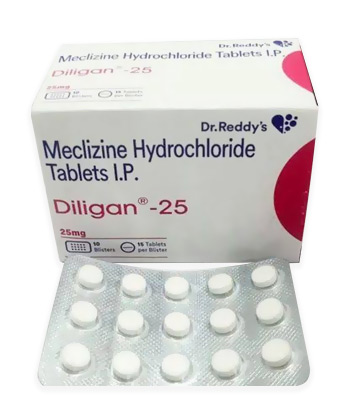
- Meclizine is used to prevent and treat motion sickness and to help relieve dizziness or vertigo. It is an antihistamine (H1 blocker) with anticholinergic properties that reduces the signals involved in nausea, vomiting, and balance-related symptoms.
- The usual adult dose is 25–50 mg taken about 1 hour before travel for motion sickness, then repeated every 24 hours if needed. For vertigo, the usual dose is 25–100 mg per day in divided doses, with a maximum daily dose of 100 mg.
- Meclizine is available as tablets, including chewable tablets in some markets; it is taken orally, and rare sublingual or buccal forms may also exist.
- Meclizine usually starts working within about 1 hour after taking it.
- The duration of action is generally about 24 hours.
- Do not drink alcohol while taking meclizine, because alcohol can increase drowsiness and other central nervous system side effects.
- The most common side effect is drowsiness; dry mouth, blurred vision, fatigue, headache, constipation, and confusion in older adults can also occur.
- Would you like to try meclizine without a prescription?
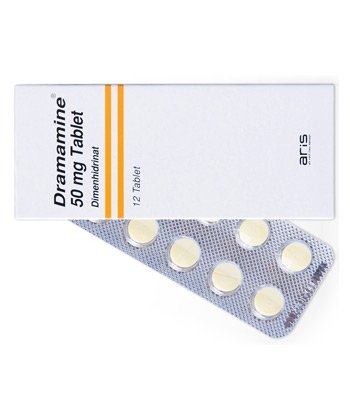
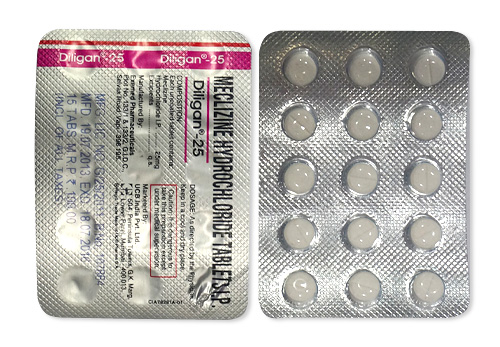

Basic Meclizine Information
- INN (International Nonproprietary Name): Meclizine.
- Brand names available in Canada (English): Bonamine.
- ATC Code: R06AE05.
- Forms & dosages: Tablet 12.5 mg, 25 mg, 50 mg; chewable tablet 25 mg, 50 mg; sublingual/buccal 25 mg (rare).
- Manufacturers in Canada (English): Not specified.
- Registration status in Canada (English): Approved as Bonamine.
- OTC / Rx classification: OTC in many settings for motion sickness; prescription in some countries and regions.
Why Meclizine Still Matters In Canada
Can you take something before a trip and avoid spending the first hour on a ferry feeling sick?
That is the main reason people still ask about meclizine.
Recent reviews and real-world use from 2022 to 2025 continue to support it for motion sickness prevention and for short-term control of selected vertigo symptoms.
The best results are usually seen when the dose is taken before exposure, not after the nausea is already peaking.
In Canadian practice, that matters because travellers still look for a reliable motion sickness medication, and Bonamine 25 mg remains a familiar option on pharmacy shelves and online listings.
For patients with dizziness, meclizine for nausea and spinning-type symptoms is still a practical symptomatic choice, but it is not a cure for the underlying cause.
That distinction matters, especially if symptoms are new, severe, or paired with hearing loss, chest pain, or neurological changes.
Across recent literature, the trend has stayed consistent: meclizine is viewed as a long-established symptom reliever, not a disease-modifying drug.
For that reason, pharmacists still focus on timing, safety, and choosing the right patient rather than expecting it to solve every form of dizziness.
Recent Evidence And Real-World Use From 2022 To 2025
What has changed lately, and what has stayed the same?
The strongest evidence still points to prevention of motion sickness, with symptom relief for dizziness and nausea being most useful when the tablet is taken before travel starts.
That means a patient heading out on a flight, cruise, or long car ride is more likely to do well if the dose is planned in advance instead of taken after the queasy feeling begins.
For vertigo, the benefit is mainly short-term comfort.
It can help people get through a bad spell, but it is not a stand-alone solution for chronic balance problems.
Canadian use patterns fit that evidence.
Bonamine is still the name many shoppers recognise, and it is often bought for holidays, school trips, and weekend drives.
Internationally, newer literature still treats meclizine as a tried-and-true symptomatic option rather than a newer breakthrough.
That is actually useful for patients, because it means the conversation is less about novelty and more about predictable effects.
The main safety signal remains sedation.
Dry mouth, blurred vision, fatigue, and sometimes confusion in older adults are the other common concerns.
In practice, the patients most likely to notice those effects are older adults and anyone who is also taking other sedating medicines.
How Meclizine Works
Why does one tablet help with motion sickness and that “spinning” feeling?
Think of it as calming the body’s motion alarm system.
Meclizine reduces the brain’s response to signals coming from the inner ear, which is why it is often used before travel or during vestibular dizziness.
Scientifically, meclizine hydrochloride is an antihistamine in the piperazine derivatives class.
Its ATC code is R06AE05, and meclozine is an alternate spelling used in some systems.
The medicine has antiemetic and vestibular-suppressant effects, which explains its use for motion sickness and some vertigo presentations.
At a more basic level, it dampens histamine-mediated vestibular signalling.
It also has anticholinergic activity, and that is part of both the benefit and the side-effect profile.
That is why people sometimes notice dry mouth or drowsiness even when the dose is helping them feel steadier.
For many patients, the logic is simple: if the inner ear is sending “move, spin, react” signals too loudly, meclizine turns the volume down.
Where It Fits In Canadian Care
Is meclizine approved for the same things everywhere?
No, and that is where product checking matters.
In Canada, Bonamine is the familiar meclizine product, and shoppers should always check the DIN on the package before buying.
Common Canadian use is motion sickness tablets for travel, usually in 25 mg strength.
Short-term vertigo symptom relief is also common in practice, although meclizine is not a universal vertigo solution.
Some people use it for general dizziness, but pharmacists usually want the underlying cause clarified first.
Brand naming varies by region.
In the United States, Antivert, Bonine, Dramamine Less Drowsy, and Travel-Ease are better known.
In the UK and Japan, meclozine may be the label you see.
In Canada, Bonamine is the name most people recognise.
Supply can vary by province, chain, and distributor, so the product available at one pharmacy may not be the same as the one listed at another.
Our online pharmacy offers meclizine without a prescription, with discreet delivery to Canada in 5-14 days.
How To Dose It Safely
What is the usual meclizine dose for travel?
For adults, the common motion-sickness dose is 25 to 50 mg about 1 hour before travel, then every 24 hours as needed.
The usual maximum daily dose referenced is 100 mg.
Tablets are sold in 12.5 mg, 25 mg, and 50 mg strengths, and chewable tablet forms exist in some markets.
For motion sickness, the key is prevention.
Taking it after symptoms are already strong is less useful than taking it before departure.
That is why many travellers keep Bonamine 25 mg in their bag with passports and snacks.
For vertigo, doses may be divided through the day, usually for a short period and as directed.
Children under 12 have limited safety data, so label directions and a paediatrician’s advice matter.
Older adults should usually start low, often at 12.5 mg if that strength is available, because sedation and anticholinergic effects are more likely.
Use caution in liver or kidney impairment, since no specific dose rules are given and close monitoring is sensible.
If a dose is missed, take it when remembered unless the next dose is close.
Do not double up.
In overdose, drowsiness, dry mouth, blurred vision, and rarely seizures can occur, and urgent medical help is needed.
Safety, Contraindications, And Side Effects
Who should avoid meclizine?
Anyone with a known allergy to meclizine, meclozine, or other piperazine derivatives should not take it.
Most products also avoid use in children under six because safety data are lacking.
Severe hepatic or renal impairment calls for caution and is often treated as a relative contraindication.
Other situations that deserve extra care include asthma, angle-closure glaucoma, prostatic hypertrophy, urinary retention, older age, and pregnancy.
The most common side effect is drowsiness.
Dry mouth is another frequent complaint.
Blurred vision and fatigue are also seen.
Less commonly, people report headache, vomiting, constipation, and confusion, particularly in older adults.
This is one reason meclizine is often bought over the counter but still needs pharmacist counselling.
Patients may not expect sedation from a travel tablet, then discover they are too sleepy to drive, cycle, or supervise children comfortably.
That is also why fall-risk counselling matters in seniors.
If someone wants a non-drowsy option, it is better to discuss that before choosing a motion sickness medication than to find out after the first dose.
Interactions And Practical Counselling Points
Does meclizine have major food interactions?
No major food interaction is usually highlighted, but alcohol is the big one to avoid.
Alcohol can increase sedation.
The same caution applies to other sleepy medicines, including cold and flu combinations.
Additive CNS depression can also happen with sedatives, opioids, benzodiazepines, sleeping pills, and some antidepressants.
Pharmacists also watch for anticholinergic stacking, because dry mouth, constipation, urinary retention, and blurred vision can become more bothersome when several similar medicines are taken together.
That is especially important in older adults and in people with polypharmacy.
In the pharmacy, the key question is often simple: “What else are you taking that can make you sleepy?”
If the answer includes several products, the meclizine plan may need adjusting.
It is also worth remembering that meclizine is sometimes misused for sedation.
That is not what it is for, and it should not be used as a sleep aid.
What Patients Say In Real Life
What do people actually like about it?
They like predictability.
Travellers often choose meclizine because it is convenient, familiar, and usually inexpensive.
Many people ask about cruise use, long car rides, and flights, and the same answer comes up again and again: take it before symptoms start.
Online search patterns often compare Dramamine Less Drowsy vs. Bonine, with patients asking whether meclizine is truly less sedating.
In community pharmacy, the most common complaint is still sleepiness.
Some people stop after one dose because the dry mouth and drowsiness are more than they expected.
Others are happy to keep using it because it controls nausea and dizziness well enough for travel.
That mix of reactions is normal.
People who need a simple, single-tablet option before a trip often prefer it.
People who need fully alert daytime function sometimes switch to a different plan after a pharmacist review.
Comparing Meclizine With Common Alternatives
Is meclizine the only choice for motion sickness?
Not at all.
Dimenhydrinate is a close relative and is also used for motion sickness, but it is often more sedating.
Promethazine can be effective for nausea and vertigo, though it tends to be more sedating than meclizine.
Scopolamine transdermal is useful for prevention, especially on longer trips.
Cinnarizine is another option used in some regions for vertigo and motion sickness.
Each option has trade-offs.
Meclizine’s strengths are simple oral dosing and a long-enough effect for travel.
Its main weakness is sedation.
It is also not ideal for every kind of vertigo, so a patient with recurrent or complex dizziness may need a different treatment plan.
That is why comparing choices at the pharmacy counter can save a lot of guesswork.
Sometimes the best option is not “stronger,” just better matched to the trip or the symptom pattern.
How It Is Regulated In Canada
What should Canadian shoppers look for on the box?
First, the DIN matters.
Meclizine-containing products are regulated through Canadian drug approval pathways, and product-specific authorisation is reflected through the DIN.
Status may differ by strength, manufacturer, and provincial listing.
Bilingual labelling also matters in Canada, especially for products distributed nationally.
Brand and generic naming can differ from the United States, where Bonine and Dramamine Less Drowsy are more familiar.
Before recommending or buying, it is smart to verify the exact product on the label.
That is especially true if you are comparing cross-border products or looking at an online listing with a different brand name.
Provincial benefit coverage can vary even when a product is authorised nationally.
So a product may be available, but not necessarily covered in every setting.
Storage And Travel Tips
How should meclizine be stored at home and on the road?
Keep it at 20 to 25°C, away from moisture and light.
Whenever possible, leave tablets in the original packaging.
That makes identification easier, especially if the box is bilingual.
Meclizine does not usually require cold-chain storage.
For travel, carry it in your hand luggage so temperature swings are less of a concern and the package is less likely to get lost.
Many Canadian travellers tuck motion-sickness tablets in the same pouch as snacks, chargers, and passports.
Check expiry dates before long trips.
If the product is prescription-only in another country, local rules should be followed when travelling there.
Good storage habits are simple, but they matter when the goal is to have the tablet ready before the ferry leaves the dock or the flight gets bumpy.
When To Use It Properly
What is the safest and most useful way to take meclizine?
For motion sickness, take it before symptoms begin.
That is the main pharmacist tip.
If you missed the timing, it may still help, but prevention works better than rescue use.
Do not take extra tablets just because symptoms are not gone yet.
Do not double the dose if one was missed.
Be careful about driving, cycling, or operating machinery until you know how sleepy you feel.
In older adults, the lowest effective dose is usually the best place to start.
If dizziness is new, severe, recurrent, or associated with hearing loss, neurological signs, or chest pain, the cause needs medical assessment.
Meclizine works best as a short-term symptom reliever.
In Canada, a pharmacist is often the best first stop before self-treating ongoing dizziness.
Common Questions About Meclizine
How soon should I take it for travel? Usually about 1 hour before departure.
Can I take it with alcohol? It is best avoided because alcohol can increase drowsiness.
Is it available over the counter in Canada? Availability depends on the product and pharmacy, but Canadian shoppers often find Bonamine in pharmacies.
Does it help all dizziness? No, the cause matters.
Can it be used for vertigo? Short-term symptom relief is common, but it is not a universal vertigo solution.
What is the usual dose? Adults commonly use 25 to 50 mg before travel, with a maximum daily dose often referenced at 100 mg.
Why do people complain about it? Sedation and dry mouth are the most common reasons.
Should older adults use it? Yes, sometimes, but usually at the lower end of dosing because side effects are more likely.
Can I order it online? Yes, and in our online pharmacy it is available without a prescription, with discreet delivery to Canada in 5-14 days.
Delivery Across Canada (English)
| City | Region | Delivery time |
|---|---|---|
| Toronto | Ontario | 5-7 days |
| Ottawa | Ontario | 5-7 days |
| Hamilton | Ontario | 5-7 days |
| Montreal | Quebec | 5-7 days |
| Quebec City | Quebec | 5-7 days |
| Calgary | Alberta | 5-7 days |
| Edmonton | Alberta | 5-7 days |
| Vancouver | British Columbia | 5-7 days |
| Victoria | British Columbia | 5-7 days |
| Winnipeg | Manitoba | 5-7 days |
| Halifax | Nova Scotia | 5-7 days |
| Saskatoon | Saskatchewan | 5-9 days |
| Regina | Saskatchewan | 5-9 days |
| St. John's | Newfoundland and Labrador | 5-9 days |