
Hydroquinone
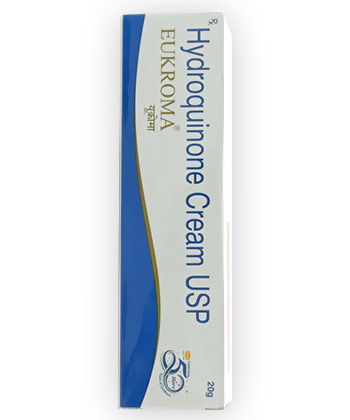
Hydroquinone
- Hydroquinone can be purchased from some pharmacies and online sellers in Canada and other regions; however, prescription requirements vary by country and strength. In regulated markets, 2% or lower may be available OTC in some places, while 4% and higher usually require a prescription. Availability can change depending on local rules.
- Hydroquinone is used to treat melasma, hyperpigmentation, post-inflammatory hyperpigmentation, and age spots. It works by reducing melanin production through inhibition of the enzyme tyrosinase, helping fade dark patches on the skin.
- The usual dose is a thin layer of 2% to 4% cream applied 1 to 2 times daily to the affected area. Treatment is typically limited to 2 to 4 months, or up to 3 months for age spots, unless a clinician advises otherwise.
- The form of administration is topical, usually as a cream; it is also available in gel, lotion, and combination depigmenting products in some regions.
- Hydroquinone usually starts to work gradually, with visible lightening often beginning after 4 to 8 weeks of regular use.
- The duration of action depends on continued use and skin response; benefits may last while treatment is maintained, but the medication is not meant for prolonged use beyond 4 to 6 months without medical supervision.
- Alcohol does not have a major direct interaction with topical hydroquinone, but heavy alcohol use may worsen skin irritation or interfere with skin healing, so it is best to use caution.
- The most common side effects are redness, mild burning or stinging, dryness, and mild peeling. More serious reactions can include allergic contact dermatitis or, with long-term misuse, ochronosis.
- Would you like to try hydroquinone without a prescription?
Key Findings From Recent Trials
Hydroquinone keeps showing up in recent dermatology discussions because it still works well for stubborn pigmentation.
Across 2022 to 2025, the main message has been consistent.
For melasma treatment and post-inflammatory hyperpigmentation, topical hydroquinone remains a benchmark depigmenting agent, especially in the 2% to 4% range.
Short, supervised courses continue to have the best real-world support.
That matters because many patients want something that fades dark patches without months of trial and error.
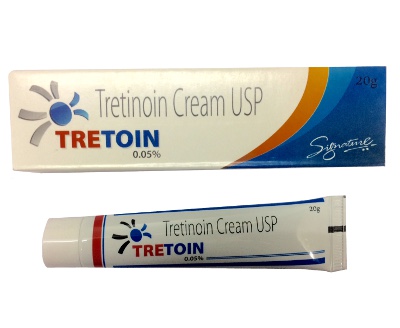
Recent literature also continues to support triple-combination creams, where hydroquinone is paired with tretinoin and a corticosteroid.
In refractory melasma, those combinations often produce faster pigment reduction than hydroquinone alone.
Canadian practice generally follows the same approach.
Dermatologists tend to use hydroquinone in time-limited cycles, then reassess while reinforcing strict photoprotection.
The safety trend is just as important as the efficacy trend.
Long-term use, higher strengths, and unsupervised online buying have all drawn renewed caution.
Exogenous ochronosis remains rare, but it is still the complication clinicians keep in mind when hydroquinone is used too long or too often.
Current risk framing also depends on skin type, treatment duration, and whether the skin is already irritated by retinoids or steroids.
Basic Hydroquinone Information
- INN (International Nonproprietary Name): Hydroquinone
- Brand names available in Canada (English): Eldoquin, Lustra, Melanex, Melquin
- ATC Code: D11AX11
- Forms & dosages: Cream 2%, 4%, 5%; gel 2%, 4%; lotion 2%, 4%; combination products with tretinoin, corticosteroids, or sunscreen
- Manufacturers in Canada (English): Valeant, Brinton, Obagi
- Registration status in Canada (English): Prescription and OTC status varies by strength and product; check current product information
- OTC / Rx classification: Prescription in most regulated markets for 2% to 4% and higher strengths; OTC status for some lower-strength products in some regions
Clinical Mechanism Of Action
Patients usually ask a simple question first.
“How does a skin-lightening cream actually work?”
Hydroquinone is a depigmenting agent that helps fade dark patches by lowering melanin production.
It is used to lighten areas with excess pigment rather than to bleach normal skin.
From a chemistry standpoint, hydroquinone is a phenol derivative and benzene-1,4-diol.
Its main action is tyrosinase inhibition, which interrupts melanin synthesis.
It also affects melanocyte function and can reduce transfer of pigment to nearby skin cells.
That is why topical hydroquinone can be effective for pigment problems such as melasma, lentigines, and post-inflammatory hyperpigmentation.
Form matters, but the basic mechanism does not change.
Creams, gels, and lotions all rely on the same active ingredient, although combination products may improve penetration and response while also increasing irritation risk.
Scope Of Approved And Off-Label Use
In Canada, hydroquinone may be available as a regulated drug product when it carries a DIN.
What patients see on the shelf can vary by product, strength, and province.
Eldoquin, Lustra, Melanex, and Melquin are among the names people most often recognize.
In day-to-day practice, prescription hydroquinone is commonly used off-label for melasma, post-inflammatory hyperpigmentation, and lentigines or age spots.
That off-label use is very familiar to Canadian dermatology and pharmacy teams.
Access is not the same everywhere.
Some pharmacies stock hydroquinone cream regularly, while others have to order it in.
Availability can vary by chain, including Shoppers Drug Mart, Rexall, Jean Coutu, and London Drugs.
In our online pharmacy, hydroquinone is available without a prescription, with discreet delivery to Canada in 5 to 14 days.
Because product rules can change, patients should always confirm the current status before ordering.
Dosage Strategy
The usual question here is not whether hydroquinone works.
It is how to use it without overdoing it.
Typical strengths are 2% to 4% cream, with some products also available at 5%.
The usual frequency is 1 to 2 times daily.
Apply a thin layer only to the affected skin after cleansing.
For melasma and general hyperpigmentation, treatment is usually limited to 2 to 4 months before reassessment.
For lentigines and age spots, once-daily use may be enough, and the course is generally kept to 3 months maximum.
For post-inflammatory hyperpigmentation, courses may run 2 to 6 months if benefit continues under supervision.
Keep it away from the eyes, lips, mucous membranes, broken skin, and areas of recent sunburn.
Daily SPF 30+ is not optional.
Children under 12 should not use it unless a specialist directs treatment.
No formal renal or hepatic dose adjustments exist.
Safety Protocols
Before starting hydroquinone, patients often worry about side effects.
That concern is reasonable.
Absolute contraindications include allergy or hypersensitivity to hydroquinone or excipients, eczema, broken skin, recent sunburn on the treatment site, and pregnancy or breastfeeding unless a specialist is directing care.
The more common side effects are redness, mild burning or stinging, dryness, and peeling.
Some patients also notice temporary mild lightening in the treated area.
More serious reactions can include allergic contact dermatitis, irritant dermatitis, nail discoloration, and, rarely, ochronosis with long-term or high-strength use.
That rare ochronosis risk is the reason most clinicians avoid prolonged continuous use beyond 4 to 6 months.
People with psoriasis, atopic dermatitis, or a history of vitiligo need extra caution.
Hydroquinone also carries hazard language about allergic skin reactions, serious eye damage, suspected genetic defects and cancer, and toxicity to aquatic life.
Good monitoring means stopping quickly if irritation becomes more than mild.
Interaction Mapping
Topical hydroquinone has no meaningful food interactions.
That usually comes as a relief to patients who ask whether it conflicts with coffee, spicy foods, or supplements.
The bigger issue is skin-care compatibility.
Retinoids such as tretinoin can increase irritation when used with hydroquinone cream.
Corticosteroid-containing combinations may help short term, but they need supervision.
Other bleaching agents can also add to irritancy.
Patients should avoid stacking it with harsh exfoliants, acids, or other sensitising products unless a pharmacist or dermatologist has reviewed the routine.
Triple combination cream regimens are common internationally, especially for stubborn melasma, but rebound pigment can happen if irritation is ignored.
Patient Experience Analysis
In practice, satisfaction with hydroquinone usually comes down to one thing.
People want to see the dark spots fade.
Many do, often within several weeks to a few months.
At the same time, irritation and dryness are common reasons patients stop early.
Canadian pharmacy counselling often focuses on patch testing, correct application, and strict sun protection.
Patients frequently search for hydroquinone cream 4%, skin lightening cream HQ 4 percent, or hydroquinone cream when they want a faster response than azelaic acid or arbutin usually delivers.
Community pharmacists hear a lot of brand comparison questions too, including Eldoquin, Melalite, and Movate alternatives.
First-time users often prefer in-store advice before committing to an online purchase.
That is especially true when a patient is dealing with melasma and has already tried several gentler products without enough improvement.
Distribution And Pricing Landscape
Canadian access to hydroquinone depends on the pharmacy, the province, and the strength.
Shoppers Drug Mart, Rexall, Jean Coutu, and London Drugs may all handle it differently.
Some products are prescription-based, while some lower-strength or compounded options may follow different access pathways.
For many patients, the online route is attractive because it is straightforward and discreet.
Still, buyers should verify legitimacy, DIN status, and pharmacist oversight before ordering.
Provincial drug programs such as Ontario Drug Benefit, BC PharmaCare, and RAMQ can affect affordability for eligible patients.
Bilingual labelling is a real part of the Canadian market, especially for nationally distributed products.
Cross-border shopping can look cheaper at first glance.
But US pricing, import rules, and prescribing requirements can complicate things quickly.
For a straightforward Canadian purchase, a product with clear labelling and pharmacist support is usually the safer path.
Alternative Options
Hydroquinone is not the only option for dark spots.
Azelaic acid is often better tolerated, although it tends to work more slowly.
Tretinoin helps with skin turnover, but it can be more irritating on its own.
Kojic acid is popular and variable in effect.
Arbutin creams are generally gentler, but they are usually less potent.
Tranexamic acid is increasingly used for melasma, either topically or orally.
When patients ask for a comparison, the practical answer is simple.
Hydroquinone remains one of the strongest traditional topical depigmenting options, but it comes with irritation risk, duration limits, and more regulatory caution than some alternatives.
Regulatory Status
Hydroquinone is treated as a drug product, not a casual cosmetic, in regulated markets.
Canadian shoppers should look for a valid DIN and pharmacist guidance.
Label details matter, especially concentration, directions, warnings, and storage instructions.
English and French labelling are part of the Canadian compliance picture.
Outside Canada, access varies a lot.
In the EU, including Romania under ANMDMR oversight, many products are prescription-only and public databases are used to track listings and warnings.
In India and many African countries, OTC and Rx forms are widely sold, including through e-pharmacies.
The Middle East usually uses prescription access, though enforcement can vary.
Some countries have tightened hydroquinone access because of safety concerns, so current product status should always be checked before purchase.
Consolidated FAQ
How long does hydroquinone take to work?
Most people need several weeks, and treatment is usually reassessed by 2 to 4 months.
Can I use it every day?
Yes, if directed, but only on the target area and only for a limited period.
Can I buy hydroquinone online in Canada?
Sometimes, but legitimacy, prescription rules, and DIN status still matter.
Is hydroquinone stronger than azelaic acid?
It is often stronger for pigment fading, but it may irritate more.
Why do I need sunscreen?
Because sun exposure can undo the progress and worsen pigmentation.
Visual Guide
A good patient handout can make hydroquinone easier to use correctly.
Helpful visuals include a dosing timeline from week 1 to month 4, a “where to buy” map showing in-store and online pharmacy options, and a coverage snapshot for Ontario Drug Benefit, BC PharmaCare, and RAMQ.
A comparison chart that places hydroquinone cream beside azelaic acid and tranexamic acid is also useful for counselling.
For search and accessibility, alt text should include phrases such as hydroquinone cream, prescription hydroquinone, and Canadian pharmacy.
Storage And Transport
Storage is simple, but it still matters.
Keep hydroquinone below 25°C, away from light and moisture.
The cap should stay tightly closed, and the original tube is the best place to keep it.
Do not freeze it.
Hydroquinone usually does not need refrigeration, but temperature stability still matters during Canadian winters and summer travel.
Leaving the tube in a car or near a heater is a bad idea.
Before travel, check the expiry date and make sure the packaging is intact.
Guidelines For Proper Use
Pharmacist counselling usually starts with the same routine.
Cleanse and dry the area first.
Then apply a thin, targeted layer only.
Use it once or twice daily as directed, and do not spread it across normal skin.
Never apply it to broken or irritated skin.
Severe irritation, swelling, or darkening means the product should be stopped and reviewed.
Sun protection is part of treatment, not an extra.
Avoiding sun exposure and using SPF 30+ every day helps preserve the fading you are trying to achieve.
Patients may ask about ERFA Hydroquinone or other hydroquinone cream options, but stock and availability can differ by region.
If a specific product is not available, pharmacists may suggest an alternative such as azelaic acid or tranexamic acid.
Delivery Across Canada (English)
| City | Region | Delivery time |
|---|---|---|
| Toronto | Ontario | 5-7 days |
| Ottawa | Ontario | 5-7 days |
| Hamilton | Ontario | 5-7 days |
| London | Ontario | 5-7 days |
| Mississauga | Ontario | 5-7 days |
| Montreal | Quebec | 5-7 days |
| Quebec City | Quebec | 5-7 days |
| Halifax | Nova Scotia | 5-7 days |
| Winnipeg | Manitoba | 5-7 days |
| Calgary | Alberta | 5-7 days |
| Edmonton | Alberta | 5-7 days |
| Vancouver | British Columbia | 5-7 days |
| Victoria | British Columbia | 5-9 days |
| Saskatoon | Saskatchewan | 5-9 days |
| St. John's | Newfoundland and Labrador | 5-9 days |