
Clomiphene
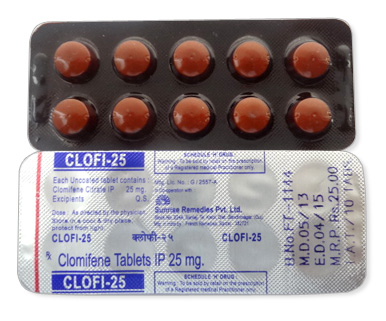
Clomiphene
- In some online pharmacies, clomiphene may be offered without a prescription, but it is legally prescription-only (Rx) in Canada and in most countries. Availability is usually through pharmacies and medical clinics with discreet packaging and delivery options where permitted.
- Clomiphene is used mainly to treat female infertility caused by anovulation and is sometimes used off-label in men for fertility support. It is a selective estrogen receptor modulator (SERM) that helps stimulate the release of gonadotropins, which can trigger ovulation.
- The usual dose for female infertility is 50 mg once daily for 5 days, typically starting on day 3 to 5 of the menstrual cycle; the dose may be increased in later cycles if needed. For off-label male use, 25 to 50 mg daily may be used under medical supervision.
- The form of administration is an oral tablet, commonly available in 25 mg, 50 mg, and sometimes 100 mg strengths.
- Clomiphene usually begins working within several days of starting the cycle, but the ovulation response is typically seen later in the treatment cycle rather than immediately.
- The duration of action lasts through the treatment cycle, and fertility treatment may be repeated for up to 6 cycles in females. In men, treatment courses may last 3 to 6 months.
- Alcohol should be avoided or limited, as it may worsen side effects such as dizziness, nausea, and visual disturbance, and it is generally best to follow your prescriber’s advice.
- The most common side effects include hot flashes, headache, dizziness, mood changes, nausea, abdominal discomfort, breast tenderness, and visual symptoms such as blurred vision or spots.
- Would you like to try clomiphene without a prescription?
Key Findings From Recent Trials
Patients usually want one clear answer before starting clomiphene: does it still work, and how does it compare with letrozole?
Recent fertility studies from 2022 to 2025 continue to support clomiphene citrate as an effective ovulation stimulant, especially for women with anovulation and selected fertility patients who do not need immediate injectable therapy.
In Canadian fertility practice, letrozole is now commonly considered first-line for many patients with PCOS, while clomiphene still has a place for selected cases and for people who respond well to oral ovulation induction.
Clomiphene is a synthetic SERM, it is prescription-only, and it is classified under ATC code G03GB02.
Across trials and real-world clinic experience, the most consistent finding is better ovulation rates than placebo, while pregnancy outcomes vary by diagnosis, age, and ovarian response.
The usual female regimen remains 50 mg daily for 5 days, with cycle-based increases up to 150 mg per day when needed, and treatment is often limited to up to 6 ovulatory cycles.
Off-label use in male fertility care also continues in specialist settings, usually 25 to 50 mg daily for 3 to 6 months with semen monitoring.
Common safety observations remain familiar: ovarian enlargement, multiple gestation, headache, mood changes, and visual symptoms such as blurred vision.
That last point matters because any new visual change while taking clomiphene should be treated as a prompt to contact the prescriber right away.
Clomiphene should also not be used during pregnancy, which remains one of the most important counselling points in fertility care.
Basic Clomiphene Information
- INN (International Nonproprietary Name): Clomifene, alternatively spelled Clomiphene
- Brand names available in Canada (English): Clomid, Serophene, generic clomiphene products depending on supplier and province
- ATC Code: G03GB02
- Forms & dosages: Tablet; 25 mg, 50 mg, 100 mg; packaging examples include 10, 30, or 50 tablet packs or blisters
- Manufacturers in Canada (English): not specified
- Registration status in Canada (English): prescription medication with product-specific authorisation and DIN where applicable
- OTC / Rx classification: prescription-only (Rx) worldwide
Clinical Mechanism Of Action
Many patients hear that clomiphene “tricks the brain,” and that is a fair plain-language explanation.
It helps the brain sense lower estrogen activity than is really present, which can trigger the body to start ovulation.
Scientifically, clomifene is a selective estrogen receptor modulator with both antagonist and agonist actions depending on the tissue.
Its main action is to block estrogen feedback at the hypothalamus and pituitary, which increases gonadotropin release and encourages follicle development.
The marketed medicine is the racemic mix of the E and Z stereoisomers, enclomiphene and zuclomiphene.
Because it is taken by mouth as clomiphene citrate tablets, it is convenient for cycle-based use, with common tablet strengths of 25 mg, 50 mg, and in some regions 100 mg.
Scope Of Approved And Off-Label Use
What is clomiphene actually approved for, and what do Canadian patients usually see in practice?
In Canada, clomiphene is a prescription medicine, and product availability can vary by province, distributor, and supplier.
Global brand names include Clomid, Serophene, Clostilbegyt, Omifin, Clomiphène®, Fertomid, and Réprefol.
The core use is female infertility linked to anovulation, especially when a fertility specialist is trying to stimulate ovulation with an oral medicine.
Off-label male infertility use also appears in specialist care, usually at 25 to 50 mg daily for 3 to 6 months with semen analysis follow-up.
It is not indicated in paediatric patients, and routine elderly use is very limited.
In Canada, patients may hear about clomiphene through community pharmacies such as Shoppers Drug Mart, Rexall, Jean Coutu, or London Drugs when stock is available and a valid prescription has been provided.
Dosage Strategy
How is clomiphene usually started, and what happens if the first cycle does not work?
For female infertility or anovulation, the common starting dose is 50 mg daily for 5 days.
Fertility protocols often begin the course on day 3 to day 5 of the menstrual cycle.
If response is inadequate, the cycle dose may be increased, with a commonly cited maximum of up to 150 mg per day.
Courses may repeat for up to 6 ovulatory cycles, depending on response and the prescriber’s plan.
For off-label male fertility use, a common range is 25 to 50 mg daily for 3 to 6 months, with regular sperm analysis checks.
There is no paediatric indication, and there is no specific elderly dose.
Clomiphene should be used with caution in liver impairment, and it is contraindicated in liver dysfunction or significant hepatic impairment.
If a dose is missed, it should be taken the same day if remembered; otherwise it should be skipped, without doubling.
Safety Protocols
Which safety issues matter most before clomiphene is prescribed?
Pregnancy is an absolute contraindication, and that point should be clear before treatment begins.
Other absolute contraindications include hypersensitivity to clomifene or excipients, liver disease or impairment, ovarian cysts not due to PCOS, unexplained uterine bleeding, and organic intracranial lesions or tumours.
Relative contraindications that need monitoring include PCOS, enlarged ovaries, thyroid or adrenal dysfunction, endometriosis, and a history of uterine fibroids.
Common side effects include hot flashes, headache, dizziness, fatigue, mood changes, nausea, abdominal discomfort, breast tenderness, and rash.
Visual symptoms deserve special attention, especially blurred vision, photophobia, or visual spots.
Severe abdominal pain, marked bloating, or significant visual changes should prompt urgent review.
Fertility clinics usually start with a baseline pelvic and endocrine assessment, because monitoring reduces the chance of missing ovarian enlargement or a higher-than-expected response.
Multiple gestation is a known risk and should be discussed before the first prescription is issued.
Interaction Mapping
Do food and other medicines matter much with clomiphene?
There are no major food interactions routinely highlighted, so it may be taken with or without food if tolerated.
Staying consistent with timing during the cycle matters more than meal pairing.
Drug interaction screening in practice focuses on concurrent hormone therapy, fertility agents, and any medicine that may affect liver function.
Extra caution is needed if another ovulation-induction medicine is already being used, unless a fertility specialist has directed that combination.
Because clomiphene is Rx-only, it should not be combined casually with online fertility products or unverified supplements sold as cycle boosters.
A medication review is often more useful than a food list, since endocrine status and contraindications drive most prescribing decisions.
Patient Experience Analysis
What do people in Canada usually worry about once clomiphene is prescribed?
Time to ovulation is usually top of the list, followed closely by hot flashes, mood changes, and the stress of waiting for a cycle to work.
During clinic consultations, patients often compare clomiphene with letrozole, especially when PCOS is part of the discussion.
Community pharmacies also hear a lot about access and pricing, including searches like Clomid Canada and Serophene Canada, because affordability still shapes treatment choices.
Questions about whether tablets can be split, whether a scored tablet is available, and whether the package is a blister or carton come up often at the counter.
Brand and package formats vary internationally, and that can be confusing for people who have seen Clomid in one country and Serophene in another.
Canadian-labelled products may also include bilingual packaging depending on the market channel.
For patients ordering through our online pharmacy, clomiphene is available without a prescription, with discreet delivery to Canada (English) in 5 to 14 days.
Distribution And Pricing Landscape
Is clomiphene easy to find in Canada, and why does pricing vary so much?
Supply through major pharmacy chains such as Shoppers Drug Mart, Rexall, Jean Coutu, and London Drugs can depend on current stock and whether the product must be special ordered.
Many patients do not walk out with the medicine the same day.
Online dispensing still depends on provincial rules and the prescription pathway used by the pharmacy.
Coverage can also vary by province and plan, including Ontario Drug Benefit, BC PharmaCare, and RAMQ.
Private-pay pricing and cross-border pricing can differ materially, which is why some patients compare Canadian and US options before deciding where to fill.
US brand names such as Clomid and Serophene are well known, while Canadian supply may be generic or brand-dependent.
The most common oral format is the tablet, usually in 10, 30, or 50-count packs.
Alternative Options
What happens if clomiphene is not the best fit for a patient?
Letrozole is the most common comparator in PCOS-related ovulation induction and is increasingly preferred in Canadian fertility care.
Gonadotropins such as hMG and FSH are more intensive, injectable options that usually cost more and need close supervision.
Tamoxifen is another SERM with limited fertility use.
Metformin may be used as an adjunct in PCOS-associated ovulation induction, especially when insulin resistance is present.
Natural cycles and IVF protocols may be considered when there is non-response or when oral ovulation induction is not appropriate.
The best choice depends on diagnosis, ovarian response, access, and cost in Canada.
For some patients, an oral medicine is still the most practical start.
Regulatory Status
How does clomiphene fit into Canada’s regulatory picture?
Clomiphene is a prescription medicine, and product-specific authorisation applies where a DIN is assigned.
That means clinician oversight is expected, especially when it is being used for fertility care.
Canadian packaging may require bilingual labelling depending on the product channel and market requirements.
The ATC code G03GB02 is useful for pharmacovigilance and international tracking.
Internationally, clomiphene is also Rx-only under major agencies such as the FDA, EMA, MHRA, ANMDMR, and PMDA.
For patients, the practical message is simple: this is a monitored fertility medicine, not a casual self-selection supplement.
Consolidated FAQ
Can clomiphene be bought online in Canada?
It should be obtained through a licensed pharmacy with a valid prescription.
Is Clomid the same as clomiphene?
Yes, Clomid is a brand name for clomifene or clomiphene.
How long is treatment usually used?
For women, treatment often lasts up to 6 cycles; for men, off-label use is generally 3 to 6 months.
What should happen if a dose is missed?
Take it the same day if remembered, otherwise skip it and do not double the next dose.
Which side effects need urgent care?
Visual changes, severe abdominal pain, and signs of pregnancy complications need prompt medical review.
Visual Guide
A simple visual can make clomiphene counselling much easier for patients who are already juggling appointments, bloodwork, and timing.
One useful infographic is a cycle calendar that shows a day 3 to 5 start and the 5-day tablet course.
Another is a Canada map that highlights provincial coverage touchpoints such as ODB, BC PharmaCare, and RAMQ.
A third visual can show the purchase pathway from physician to pharmacy to refill.
It also helps to display tablet strengths of 25 mg, 50 mg, and limited 100 mg options, along with packaging examples such as 10, 30, or 50 tablets.
That kind of visual support is especially useful when patients compare Clomid Canada information with what they see in clinic or online.
Storage And Transport
Where should clomiphene be kept at home, and what about travel?
Store it at room temperature, between 15 and 30°C, protected from moisture and light.
Keep tablets in the original packaging until use.
Do not refrigerate or freeze the medicine.
Clomiphene does not require cold-chain handling, which makes travel within Canada much simpler than with injectable fertility products.
If tablets are carried across provinces or internationally, having the prescription documentation available is a smart precaution.
Delivery Across Canada (English)
| City | Region | Delivery time |
|---|---|---|
| Toronto | Ontario | 5 to 7 days |
| Ottawa | Ontario | 5 to 7 days |
| Hamilton | Ontario | 5 to 7 days |
| Montreal | Quebec | 5 to 7 days |
| Quebec City | Quebec | 5 to 7 days |
| Calgary | Alberta | 5 to 7 days |
| Edmonton | Alberta | 5 to 7 days |
| Winnipeg | Manitoba | 5 to 7 days |
| Vancouver | British Columbia | 5 to 7 days |
| Victoria | British Columbia | 5 to 7 days |
| Halifax | Nova Scotia | 5 to 7 days |
| Saskatoon | Saskatchewan | 5 to 9 days |
| Regina | Saskatchewan | 5 to 9 days |
| St. John’s | Newfoundland and Labrador | 5 to 9 days |
Guidelines For Proper Use
What should Canadian patients keep in mind once the prescription is in hand?
Follow the cycle timing exactly as prescribed and do not double a missed dose.
Report visual symptoms, significant mood changes, or severe abdominal pain promptly.
Clomiphene should not be used during pregnancy, and treatment should stop if pregnancy is confirmed, according to the prescriber’s direction.
Follow fertility specialist instructions carefully, especially if treatment is linked to OHIP-covered care, private plans, or provincial benefit programs.
Follow-up ultrasound or lab checks may be recommended where clinically indicated to monitor ovarian response.
The safest results usually come from good timing, proper selection, and close communication with the clinic and pharmacist.
That is why clomiphene remains a useful oral fertility medicine in Canadian practice when the diagnosis and monitoring are right.